Thinking Congregations
  • Home
  • Blog
  • Coaching
  • Events
  • About
  • Contact
  • Home
  • Blog
  • Coaching
  • Events
  • About
  • Contact

3 Ideas That Will Improve Your Preaching

1/21/2018

2 Comments

 
Picture

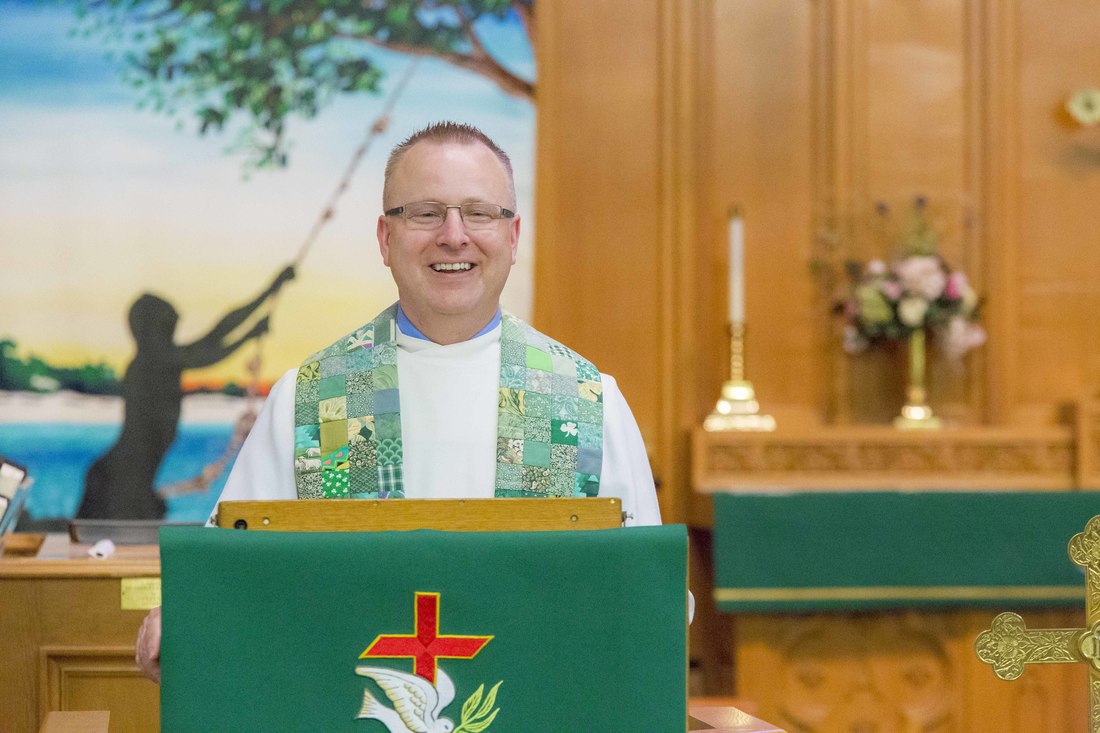
Clergy develop and deliver roughly fifty-two sermons (fifteen to thirty minutes in length) year after year.  National surveys typically rank preaching as the number one reason people attend a congregation.  So, the pressure is on, and clergy know it. 
 
Effective preaching is both skillful and artistic.  The context of preaching is the community.  Without an awareness of the underlying relationship system of a community, the skill and artistry are lost in an emotional process.  Therefore, the three keys to effective preaching are:

  1. Effective preaching is based on core principles, values and beliefs.
  2. Effective preachers stay in good emotional contact with their members especially members who don't agree with their preacher or when the preacher disagrees with their members.
  3. Effective preachers work on self-regulation.
 
Most clergy make use of online and printed resources to prepare their sermons.  If clergy approach the process of developing a sermon with a clear set of principles, values and beliefs then a good resource can spur the preacher’s thinking.  Sometimes preachers use a resource to find specific content for their sermon.  But some use a resource as a substitute for thinking and may end up preaching someone else’s sermon.    
 
How a preacher makes use of a resource is connected to their level of clarity about core principles, values and beliefs.  Preachers become clear by sifting through their core principles, values and beliefs to determine which ones represent their best thinking and which ones represent the thinking of other people.  The core principles, values and beliefs that are sifted out from this process become the basis for the preacher's preaching.  I’ve come to a place in my preaching where I know when I’m preaching a sermon based on my thinking and when I’m preaching a sermon based on the thinking of others.  There is a notable difference.  And given the feedback I’ve received from congregants over the years, I know the congregation can tell the difference as well.  There is a difference in the way ideas are communicated when they come from self and when ideas are coming from someone else.
 
As congregations and the larger society become increasingly polarized, preachers are preaching to congregations that are divided over major issues.  In my tradition, the United Methodist Church, on any given Sunday my preaching will resonate with some and conflict with others.  Some will experience a sermon as supportive and encouraging and feel a connection to the preacher.  Some will experience a sermon as challenging and feel at odds with the preacher.  An awareness of this underlying relationship process can be useful to a preacher. 
 
The challenge for today’s preachers is developing the capacity to articulate a solid belief without perpetuating an already present polarization.  Preachers are at their best when they preach a sermon based on core principles, values and beliefs without permanently disrupting the relationships in the congregation.  It requires an effort of staying in good emotional contact with members or key leaders (depending on the size of the congregation) when they disagree with you, or when you disagree with them.  The opposite is also true that a strong, positive togetherness between the preacher and congregation can make it difficult for the preacher to articulate their core principles, values and beliefs. 
 
The best way to manage tension in the relationship system is to do a better job of managing self.  Self-regulation is at the heart of Dr. Murray Bowen’s concept of differentiation of self.  The forces for togetherness and individuality creates tension in the relationship system.  As people move away from or closer to others, anxiety goes up and down.  This process of managing anxiety by moving towards some or away from others at an emotional level can influence what a preacher says, does and feels.
 
During the development of a sermon, preachers are likely to experience their own worry and fears about what might happen if they actually preach what they are thinking.  An internal debate ensues about what to say, how to say it and what the consequences might be.  It’s not the case that preachers should always say whatever they are thinking.  What leads to more effective preaching is an awareness of the emotional process in the relationship system.  
 
The ideal place to become aware of the emotional process is in one’s family of origin.  There, one can begin to “see” the process of individuality and togetherness, and anxiety and tension in the system.  The more I work at this in my family, the more courage I have in my preaching.  The extent to which preaching has improved my ability to define a self in my family of origin is also worth consideration.
 
Here are some ideas to think about as you prepare to preach:

  • What ideas are you clear about?  What questions do you have?  
  • Present your thinking without the need for others to agree.
  • Present your thinking without being defensive.
  • Always consider how your congregation will respond.  Who will react to your thinking?  How will they react?  What will you say or do without reacting back? 
  • Develop a plan for relating to with those who react negatively and positively to your thinking.
  • If you greet people after the service, what does it look like to be emotionally neutral towards those who react negatively or positively? 
  • How will you do a better job of self-regulating your reactivity to the reactivity of others?

Remember, the overall goal is to represent one’s best thinking while staying in good emotional contact with the congregation, and to regulate self as anxiety and tension fluctuate in response to the counterbalancing forces of togetherness and individuality in the relationship system.

2 Comments

When Institutions Overfunction

1/7/2018

0 Comments

 
Picture

​What is an institution?  An institution is a structure that sustains a social movement; a movement that is focused on a cause or solving a problem in society.  Historically, movements light up in society to create change.  They are like bursts of fire.  Sustaining a movement over time is difficult.  Eventually, movements transition into institutions that provide structure to keep the fire burning. 
 
A member of a congregation discovered that teenage women who gave birth while in high school were more than likely to drop-out.  She started offering free childcare to help these women graduate.  The need was greater than one person could manage, so she enlisted the help of her congregation.  Eventually, people from the community volunteered for the program.  As the program grew, policies and procedures were adopted.  A board of directors was established.  Voila!  A movement becomes an institution. 
 
While we can often bemoan the existence of institutions (with their bureaucratic structures and their slow pace of change), their existence is important.  When it comes to addressing social problems, institutions provide a framework for developing best practices and ethical responses to a problem.
 
Institutions use best practices that are proven to be effective in serving a specific clientele.  Public institutions have long championed the use of best practices.  Instead of reinventing the wheel, they focus on what has been successful.  If you attend a training in your field, more than likely you will hear something about best or standard practices.
 
I’ve written extensively about the challenges congregations have in adopting best practices.  While “experts” in congregational development might have some common agreement on what might constitute “standard practices” for congregations, there is no clear standard for all congregations within a particular faith.  It doesn’t exist.  Leaving that aside, the main problem seems to be that best practices are not transferable.  That is, what is successful in one congregation cannot be easily replicated in another.  No one has adequately explained the reason for this.  It is still elusive. 
 
Institutions practice ethical responses to a problem.  Ethics in this context is defined as protecting staff from doing harm to their clients and protecting staff from doing harm to themselves.  Anyone who has worked or volunteered in social services knows that one can quickly become overwhelmed by the demands and needs of helping others.  Institutions find ethical solutions for meeting needs without exhausting their staff while at the same time providing quality care that does not harm their clients.  For example, nursing homes structure themselves to manage the risks inherent in caring for the elderly.  Staff rotates, tasks are divided up, and rules are followed to protect staff from burning out and protects clients from being underserved.  Nursing homes vary in their ability to manage both well. 
 
The question remains, does a focus on best practices that are ethical help institutions improve their quality of care or do they perpetuate a much deeper problem?  Whenever social problems like poverty, food insecurity, economic opportunities (to name a few) continue to be a problem while there is an ever-expanding field of social services, it’s important to ask the question, “what is missing from our understanding of the problem?”  The answer, it turns out, is the role institutions play in perpetuating the problems they are trying to solve.
 
When it comes to helping others, Dr. Murray Bowen observed that people can unintentionally do harm to others by doing too much.  He was aware that underneath our individual behavior is a deeper emotional process embedded in a relationship system.  Here is what he had to say:
 
“. . . A triangular emotional process through which two powerful people in the triangle reduce their own anxiety and insecurity by picking a defect in the third person, diagnosing and confirming the defect as pitiful and in need of benevolent attention, and then ministering to the pitiful helpless one, which results in the week becoming weaker and the strong becoming stronger.  It is present in all people to some degree, and by overcompassion in poorly integrated, overemotional people, powered by benevolent overhelpfulness that benefits the stronger one more than the recipient, and is justified in the name of goodness and self-sacrificing righteousness.  The prevalence of the process in society would suggest that more hurtfulness to others is done in the service of pious helpfulness than in the name of malevolent intent.”  Family Therapy in Clinical Practice, p 434. 
 
When is helping not helping?  Or, what do you do when helping others does not solve the problem?  This is an institutional problem.  The response to this ongoing problem has been the development and management of best practices and ethical procedures.   Yet, despite best practices, institutions become stuck when they are not able to accomplish the very thing the original movement championed.  The reason they become stuck is that they do not address the underlying emotional process.  The emotional process is fundamentally about anxiety.  Anxiety is a part of the family emotional process.  Therefore, all social problems are ultimately family problems. 
 
Institutions have historically tried to take responsibility for problems in the family.  But what if institutions changed their approach?  What if they became resources to the family without attempting to solve family problems?  What if institutions helped families by equipping family members to solve their problems?  What if institutions redirected themselves to support the family’s efforts to come up with a viable plan for the family and the individual members?  What would this look like and how could an institution organize itself to be oriented in this direction?    
 
So, what would a more responsible caregiving position look like for an institution within the context of the family?  Here are some more questions to consider:
 
  • What are individuals and families capable of doing for themselves?
  • How does one determine what one can do for self?
  • What are realistic expectations for functioning?
  • As a staff person or leader, what am I willing to do or not do for an individual or family?
  • What facts are needed to make a thoughtful decision about this?
  • Is the institution putting the client’s needs first or the needs of the institution? 
  • How does one tell the difference?
  • When tension in the relationship system of an institution goes up, who is more likely to bear the brunt of the tension?  The clients or the staff? 
 
When an institution overfunctions in caregiving, they undercut the motivation and agency of the individual and the family.  The idea of stepping back as an institution, by letting clients take the lead, creates anxiety for the institution which is evidence of the institution’s tendency to overfunction.  It’s worth noting that when I talk about institutions, I’m really talking about a relationship system of leaders and workers.  Each person in the system brings a level of anxiety and functioning to their work that is based in their family of origin.  Some institutions manage their problems better than others, depending on the functional level of the leaders and to some extent the staff.
 
Thinking systems can provide a deeper awareness of the emotional process at play in the family and in the broader society.  Thinking systems is an alternative to being overly focused on best practices and ethical behavior.  Institutional leaders who can think systems do a better job of addressing societal problems because they take responsibility for their part in solving the problem and empower the leaders in a family to lead.  
Subscribe to receive the newest blog in your inbox every Monday morning.
SUBSCRIBE
0 Comments

It's Not Personal

1/1/2018

3 Comments

 
Picture

It is not personal. Try telling yourself “It’s not personal” the next time your're blamed for something. Make it your mantra the next time you are criticized. “It’s not personal.” This phrase seems counterintuitive, doesn’t it? Why? Because blame and criticism always feel like personal attacks. And when the feeling system is active, it’s difficult to shift into the thinking system.

At an intellectual level, when things are calm, I can see and understand what others are up against in their life. I can also see how my behavior creates challenges for others. In calmer times, I can see and observe what I’m up against by the behavior of others. But, when I perceive tension in the relationship system and my feelings are revved up, my focus will shift.

When one is criticized or blamed, the brain transports this message to a deep, emotional section. And it’s from that deep place the brain mounts a reactive response. It’s as if a deep force is awakened from within that surges up and out to defend the self. It’s an automatic response. And, for a lot of us, it’s strong; strong enough to override our thinking.

When I first started applying systems thinking, it was initially out of faith because I lacked experience. In those earlier years, I borrowed the phrase, “It’s not personal.” I said it to myself whenever I was in conflict with someone (either externally or internally). Over time, I began to recognize that conflict and tension weren’t about them or me. Instead, it was about the family of origin that shaped who we are.

Our twitchiness to the vibrations of anxiety in the relationship system is rooted in how our families as an emotional unit manage anxiety. Our automatic responses to anxiety are shaped by the way the family operates in the face of a challenge. And not just the family today, but generations and generations of families have each left their functional mark on subsequent generations of the family.

Another mantra I picked up along the way is, “the other is doing the best they can with what they have. I am doing the best I can with what I have. We can all do better.” It’s an acknowledgment that what is happening between us is not about the two of us. It is much broader in scope. I cannot possibly understand the other’s reactivity towards me without having an understanding and appreciation of the family. Likewise, I cannot possibly understand my reactivity without awareness and understanding of my family of origin. Ultimately, the thinking behind these phrases converted me to thinking systems. It led me to the believe that, within the context of one’s family, individual behavior makes sense.

Rabbi Ed Friedman, author of the book "Generation to Generation," said that criticism is a form of pursuit. It’s part of the force for togetherness. That’s why some people become critical as their anxiety goes up. An increase in anxiety in the relationship system will initially pull people together, even if the pull has a negative valence. This is why, when we are blamed or criticized, it’s hard to shake it off and not take it personally. We are reacting to the force for togetherness. To make it personal is an acknowledgment that one is caught up in the togetherness. This is why, paradoxically, not to take it personally is an effort for self. It is an effort towards differentiation of self. And differentiation of self is about being a better connected self.

Praise from others can be just as precarious. It can feel good, but when the feeling is caught up in the emotional process of the relationship system, it’s still part of the force for togetherness. The force for togetherness functions to align everyone’s thinking, feelings, and actions in the face of a perceived threat. Praise can just as easily get someone in line as can criticism.

Of course, there is nothing inherently wrong with either criticism or praise. I have been aided by both in my life during times of need. But they are problematic when one’s life course is only guided by the criticism or praise of others. In this way, criticism and praise undercut one’s ability to fulfill their purpose and be all that God wants them to be.

So, as we begin a New Year, perhaps a good resolution would be not to let criticism and praise guide your ship’s sails, but instead let thinking, goals setting, beliefs, core principles and responsible living be your guide!
Subscribe to receive the newest blog in your inbox every Monday morning.
SUBSCRIBE
3 Comments

What's Missing from All The Talk About Decline

12/10/2017

0 Comments

 
Picture

There’s a lot of talk about shrinking congregations.  The decline in attendance is most noticeable in the mainline Protestant church.  There is considerable debate about what factors contribute to decline.  The lack of clarity about it is concerning.  It’s creating fatigue among congregational leaders because they are in an untenable position.  Leaders cannot effectively lead change if they don’t understand the processes and factors driving the problem. 
 
Over several decades, well-intentioned coaches talked about the importance of contemporary worship, the size of the parking lot, the number of people in the choir, the colors of the interior of the building, removing denominational insignia, greeters in the parking lot, cushions on the pews, gift bags for visitors, a robust social media presence, and a branding plan.  A case can be made for the importance of any of these solutions.  But none of them get us closer to the heart of the matter.  
 
One motivation for writing this weekly blog is to provide an alternative way of thinking about the challenges congregational leaders face.  It is an alternative to the “what works for us” and “do these five things and have success” mentality that feeds much of the leadership training that is offered. 
 
It’s not all doom and gloom, though.  We can claim, with a degree of certainty, that the following list is essential for building congregations:  Critical mass, money, a compelling narrative, and a system for developing relationships.
 
 
Butts in the Pews
 
Critical mass is essential for long-term sustainability.  If you walk into a congregation that has a dozen people in worship, you might wonder, “what’s wrong with this congregation that there aren’t more people here?” As a consumer, you are more likely to purchase from an online company that has hundreds of positive reviews then from a company that has no reviews, even if they offer the best price.  Critical mass matters.  But we can’t stop there.  Even megachurches (with their stellar attendance records) are facing decline.  Clearly, other factors are in play.
 
 
Resources
 
Congregations with long-term sustainability have access to money.  Those who are able to raise capital are able to grow.  Money matters.  Other resources matter too, like having well-trained leaders and volunteers.  But let’s not forget that even if you have access to money, leaders, and volunteers you still need to use them wisely.  A community built along the ocean will have thirsty citizens if they don’t figure out how to purify the water and disburse it to the people.
 
 
Beliefs
 
A compelling narrative is one that resonates and connects with us.  A compelling narrative is relevant to our daily lives.  It speaks to us.  It motivates us to action.  It gives us meaning. 
 
I titled this section “beliefs” because the narrative and our beliefs eventually intersect at a point of understanding.  To believe in a narrative, one must understand it and be able to connect it to one’s life.  
 
I still have questions about narratives and whether the decline in the mainline Protestant church is related to the narrative.  Organizations that are growing do a good job of telling a compelling narrative.  But is the decline in congregations related to the narrative?  If so, how can congregations do a better job of telling a compelling narrative? 

 
Belonging Precedes Believing
 
I’ve written already about belonging vs. believing.  You can read my blog about it by clicking here.  Congregations that thrive have a highly structured and well-maintained relationship system that helps new people become connected, and supports an individual's effort to reach their goals.  Congregations flourish to the extent they connect people together in meaningful ways.  Belonging without believing is more important than requiring people to agree to a fixed set of creeds and doctrines before they can belong.  
 
 
Where Do We Go From Here?
 
I still have questions about these characteristics of vibrant congregations.  How can they be measured quantitatively and qualitatively?  What is the interplay between these characteristics (does one dominate or are they all equal)?  How many of these characteristics do you need to thrive (all of them, a mixture, or just one)?  Are there examples of vibrant congregations that have none of these characteristics or only one of them?  What characteristics are missing?
 
And what about the one thing I have yet to mention: leadership?  How in the world do we develop good leaders?  Dr. Murray Bowen described the importance of having a good family leader when dealing with challenging families.  More than ever, congregations need good leaders.  Bowen observed that good leaders are working on differentiation of self. 
 
Many factors make up the concept of differentiation of self.  One of them is the ability to make good use of new and relevant information.  Leaders working on differentiation of self are open to new ideas and new ways of thinking.  They are open to incorporating these new ideas into their way of thinking when appropriate.  They evaluate the way they think but are unwilling to give up their thinking when faced with the immature or irresponsible thinking of others. 
 
Leaders are flexible.  Instead of buckling down to achieve some sort of short-term gain, they step up and out to embrace a new challenge.  Leaders understand that flexibility is the key to long-term sustainability. 
 
Differentiation of self is about leaning into the complexity of these issues and their connection to a congregation.  It’s about curiosity, discovery, reflective thinking, creativity, and risk-taking.  Without these things, congregations become reactive to their changing circumstances and face an avoidable death.  Leaders who are working on differentiation of self places themselves in a better position to lead their congregation into the future.  Critical mass, money, a compelling narrative, and a system for developing relationships may be essential, but differentiation of self is key.
0 Comments

When Blaming Makes You Feel Better

12/3/2017

0 Comments

 
Picture

My mood shifted. I had been feeling stressed, worried, and my thinking was cloudy. And then it all shifted. I became relaxed, happy, and clearer. I sat down and retraced my steps, specifically, my interactions. When did my mood shift? It was a compliment. Someone said something positive about my behavior. It was an emotional response to a relationship. I decided to dedicate this blog to another mood shifter: blame.

To blame is human. We all do it. But why? Blame serves a purpose. It calms down a relationship system that is tense and anxious. Pretend your congregation has spent weeks planning an event. The day of the event arrives, and nothing goes according to plan. Attendance is low, and the people who manage to show up are disappointed. In this case, it’s not unusual for someone to be blamed for everyone’s disappointment.

Inevitably, someone will take responsibility, not for the event, but for the feelings of disappointment in others. They will either blame themselves or blame others. When the person taking responsibility for the outward display of feelings of disappointment by others manages to get everyone to agree on whom to blame, the congregation will calm down. The extent to which this happens is an indicator of the level of maturity of the leaders of the congregation. The more blaming there is, the less mature the leaders.

Politicians are certified blamers. The public may dislike politicians who blame others. We may think it’s manipulative or callous. But politicians are humans. They react to the tension and anxiety of their constituents. They are just as tempted as the rest of us to calm down their people (their base) by blaming someone else.

Clergy are prone to blame. If a congregation is uptight, stressed, anxious, and tense clergy may find someone to blame. In congregations with a large staff, it’s not unusual for one staff person to be blamed for the disappointment or upsetness of the congregation. Someone on staff (often the pastor, but not always) will feel responsible for the negative feelings of the congregation and seek out someone to blame. We don’t like to admit it but (and for some people it is difficult to observe) we simply feel better when we blame others. It’s the only reason we do it.

As I mentioned earlier, some leaders blame themselves. Clergy overfunctiong when they blame themselves for problems in the congregation by taking too much credit for the success and failures of the congregation. When clergy overfunction, the relationship system calms down. Judicatory leaders who work closely with clergy are aware that clergy experience burnout and often do a poor job of self-care. Missing from this awareness is an understanding and appreciation of the emotional process in the relationship system. You can see it at work when clergy self-blame. When clergy blame themselves for problems in the system, they put pressure on their body to perform. It may sound counterintuitive, but clergy perform better when they stop overfunctioning.

The desire to blame diminishes as leaders work on developing a systems view of relationships and an awareness of the emotional process. A good coach can help with this. Consider the following questions:

  • What does a more responsible leadership position look like?
  • How clear are you about your responsibilities? What are you willing to do for others and self? What are you not willing to do for others or self?
  • What challenges are others facing in the relationship system?
  • How will you redirect future conversations away from blaming someone toward articulating a systems perspective? How can you be more responsible for the way you engage other people?
  • How does blame (blaming others or blaming self) work in your family of origin? Where do you see it light up? What insights are useful for thinking about blame in the congregation?
Subscribe to receive the newest blog in your inbox every Monday morning.
SUBSCRIBE
0 Comments

How To Catch Yourself, Even When You're Stressed

11/26/2017

4 Comments

 
Picture
 
I recently had a conversation with someone about self-regulation.  Self-regulation is the ability to control or adjust one’s functioning without depending on others.  One way to think about it is the capacity to regulate thoughts, feelings, and actions independent of others.  At infancy, bodily regulation is dependent on others, particularly the mother.  Fathers have some influence.  As we develop into adulthood, we decrease the dependency on others and increase the capacity to self-regulate.  No one ever makes it all the way!  We enter adulthood with a mix of both.  Dr. Murray Bowen developed this idea in his concept of differentiation of self.  You can read about it by clicking here.
 
The extent to which any one of us can self-regulate is connected to a couple of factors.  These factors include the capacity of the parents to self-regulate, the amount of tension in the family during a child’s development, the level of anxiety in the family, and the way previous generations managed tension and anxiety.  Adult children leave the family with more or less the same capacity to self-regulate as parents.  Some do a little bit better, some do a little bit worse.  But it’s roughly the same.
 
When adult children leave the family to start a new one, they hook up with someone who has a similar capacity to self-regulate.  Whatever dependency is leftover from the family of origin will be managed in this new relationship through a process of reciprocity.  For example, one spouse may be vulnerable to health problems while the other spouse is consistently healthy.  I had someone tell me, after the death of their spouse, that they were surprised to discover how their overall health had improved.  In the marriage, they were always sick, and the other was always healthy.  Now that the spouse was gone, their general health was improving. 
 
Individual models dominate most approaches to improving functioning.  People work at doing better as if it’s completely about them.  New Year’s is coming up.  Resolutions are usually about doing a better job of self-regulating.  “I’m going to lose weight.”  “I’m going to learn to play the cello.”  “I’m going to read more novels.”  These resolutions represent efforts to self-regulate behavior.  But without an understanding of the family emotional process, people generally fail in their individually focused efforts.  The challenges we face to regulate ourselves are remnants (the stuff leftover) from our childhood.  It represents our dependency on others to function.  The challenge is to finish the unfinished work of growing up. 
 
There is a natural developmental process of staying focused on what is important to self.  This process of staying focused is disrupted to a greater and lesser degree by the amount of tension and anxiety in the family.  As the level of anxiety in the family increases, the force of togetherness pulls individuals away from self-regulation towards the family which operates as one emotional unit.  It’s not unusually for people to miss this.  It’s automatic.  The phrase that best describes this process is learning to “catch yourself.”  It’s difficult to do, to be sure!  Most people can identify it happens after the fact.  So, how can we learn to catch ourselves earlier in the process?
 
Learning to catch oneself requires what I call the three C’s: clear, calm, and connected.  The first “C” is about being clear about how the family emotional process influences individual functioning.  Sometimes it’s simply an awareness that there is a process and then “seeing” it at work.  The second “C” is about staying calmer than everyone else in the family to observe the family emotional process and how it impacts each person in the family.  The third “C” is about getting connected with everyone in the family.  You can only observe this process if you are connected to everyone else.  
 
Beyond these three steps, there are no specific techniques.  It is a learn-as-you-go process.  A coach who is a good thinker can make a big difference.  Being curious, inquisitive, observational, interested, motivated, and organized can all contribute to this process of catching oneself, and lead one to doing a better job of self-regulating.  The effort to pay attention to one’s functioning while at the same time observing the functioning of others can lead to better self-regulation.  In my experience, as one works on observing the family emotional process, one can catch oneself sooner with practice.
Subscribe to receive the newest blog in your inbox every Monday morning
SUBSCRIBE
4 Comments

Getting on The Other Side

11/12/2017

0 Comments

 
Picture
Subscribe to receive the newest blog in your inbox every Monday morning.

Let’s talk about the people who get under your skin. You know who I’m talking about. These are the people who can get you all revved up. Maybe it’s your child’s significant other, your boss, your neighbor, a member of the congregation, or a court-appointed therapist. You can barely tolerate being in the same room with them. It’s clear to you that THEY are the problem. End of discussion.

Let’s talk about what you do to people who get under your skin. You blame them! You blame them for getting everyone worked up. You blame them for how they make you feel. It’s clear to you that this person is “not normal” and therefore MUST change. It is the only solution. If you’re human, you’ve probably said this to yourself and, on occasion, out loud.

An alternate reality may enter our conscious mind to suggest that the situation is more complicated. If you listen carefully, you can hear people vacillate between two realities. On the one hand, we get worked up about someone’s behavior. On the other hand, we recognize that we all behave in ways that challenge others. Even though we try not to blame others, we just can’t help ourselves.

Directly or indirectly, my expend energy to try and change the other person. The direct approach is, well simply: “You need to change your behavior!” The indirect method is much subtler. But the desire is still the same. We keep hoping the other person will get the message and change.

Have you ever wondered how someone’s behavior gets under your skin? Have you ever noticed that your level of irritation with them fluctuates? When I coach clergy, I hear stories of how parishioners can get them revved up. The clergy diagnose and blame others for the problems in the church. Some clergy sound very convincing. What’s remarkable is what happens when I ask a simple question.

Where does this bad behavior occur in your family? I first heard this question over a decade ago while participating in a clergy group. It’s a question I’ve started to ask myself and others. What’s remarkable is that I’ve never had someone answer with, “nowhere.” The longest I’ve had to wait for an answer is about five seconds. Almost immediately, clergy can identify someone in their family.

It turns out that it’s not people that get us revved up. It’s the relationship process that takes place in between people. It’s the back and forth process which is automatic, reactive, and reciprocal. It’s back and forth because the other person is reacting to you and other people just as much as you are reacting to them and to other people. It’s automatic because the emotional system hijacks the prefrontal cortex. It’s reactive because the other person’s behavior makes you uncomfortable. It’s reciprocal because individuals in a relationship system are always adjusting to find a sustained level of comfort.

Pretend that Andrew is a member of your congregation. Andrew loves to tell people what to and how to do it. He is more than happy to complete a task for someone who isn’t as organized as he is. If you need something done, Andrew is your guy. The downside is that no one will work with Andrew.

Everyone is unhappy on the committee Andrew chairs. No one talks during the meetings and Andrew continues to take on more and more responsibility. The meetings typically end with everyone being frustrated, including Andrew. You decide to take Andrew out for coffee.

“Tell me what it was like growing up in your family,” you ask. Andrew begins to tell you about being the oldest of six siblings. Andrew grew up on a farm. His father died when he was sixteen, leaving him responsible for the farm and the family. After his father’s death, his mother became depressed and less available to Andrew and his six siblings. This left Andrew with the additional responsibility of parenting his siblings. Under these circumstances, Andrew learned how to keep the family afloat. His siblings graduate high school except for one sister who dropped out. She still lives with their mother and is unable to keep a job. Andrew, who still lives close by, makes daily trips to the house to keep his mother organized and the sister out of trouble. You leave the conversation with a new appreciation of what Andrew is up against.

On the way home, in the car, you think about your family and wonder who exhibits this same challenging behavior. It’s your mother. When she is stressed, she tries to organize your life. When this happens, you find it difficult to maintain your level of functioning. You decide it’s time to take more responsibility for your functioning, so you create a plan to not depend on your mother’s over functioning. A good coach, trained in Bowen Theory, can be a helpful resource in figuring out how to address this reciprocal, relationship challenge.

The key to dealing with difficult behavior is to get on the other side of it:
  • What challenge is the other person facing?
  • How does their behavior function in a way that makes sense?
  • What part does my reactivity play in perpetuating the problem?
  • How can I function differently in a way that is more responsible?
  • How is a more neutral, mature response different than the way I’m responding now?

Getting on the other side of someone’s behavior can make a difference in developing strategize for working on differentiation of self. One can discover that the other person is doing the best they can with what they have. And while we can all do better, I can do better while working on my part of the problem. Getting factual about what someone is up against in their life is one way to develop a mature response to a problem. What will it take for you to get on the other side of a problem so you can be the best self you can be?
SUBSCRIBE
0 Comments

3 Steps Toward Resiliency

10/29/2017

0 Comments

 
Picture
​


And Are We Yet Alive is a classic Methodist hymn, written by Charles Wesley. He wrote it as a gathering song for worship. John Wesley, his brother, incorporated the hymn into the conferences of the Methodist movement. Today, it’s often sung when United Methodist come together for special gatherings.

I once illustrated in a sermon the significance of this hymn in my life. Using sticky notes, I wrote down all the crises and challenges I faced in my life. No matter how great or how small, I wrote down each one. I stuck the sticky notes to my body. I was covered from head to toe in sticky notes! Then I repeated the phrase, “And am I yet alive!” At the time, it was a reminder that, after everything I faced, I was still alive.

All of us experience challenges. The question remains: Why are some people more resilient than others? What does it take to overcome a challenge? I think it has something to do with what we say to ourselves, how we think, and what we do.


What to Say

After I preached that sermon, I changed the way I talked to myself. I started saying things like, “You had faced challenges before and made it through. You will survive this new challenge, just like you have survived everything else.” When I’m stressed, and my mind is revved up, I remind myself, “In a year from now, you won’t remember going through this.” In most cases, that’s true. And when I’m really desperate, my mantra becomes, “This too shall pass.”

What do you tell yourself when faced with a challenge? I ask people this question whenever someone tells me they are facing a challenge. I might also ask, “What helped you get through it? What did you tell yourself?” We all have things we tell ourselves. One exercise to consider is to ask six people you are close to what they tell themselves during difficult times. Make sure to ask family members!


How to Think

How does one “think systems?” It’s easy to get fixated on one person and see them as the “problem.” We assume behavior is confined to the individual, but it’s not. A systems view of behavior shifts the focus off of the individual and onto the relationship system. For Bowen, the family is the main system. He saw the family, not as a collection of individuals, but as an emotional unit. Each person’s behavior connects to the functioning of the system. When there is a change in the way one person behaves, and the whole family shifts its functioning.

Dr. Bowen developed the family diagram as a way to observe and think systems. Using the format of a pedigree chart, Bowen diagrammed the emotional process within the family unit, including the multigenerational family. By approaching the family as a system, Bowen presented a new way to think about behavior within the context of a family.

This approach is also useful for other systems like congregations, workplaces, and communities. It’s easy to diagnose others or self. Seeing a challenge through a system lens broadens the focus of the problem, reduces the intensity, and provides a pathway for a more mature response.


What to Do

Just to review: learning to function at a higher level involves three basic steps. The first step is to calm down the internal stress response using words and phrases that reorientate the brain towards a more factual perception of reality. The second step is to widen one’s focus and not get caught in a narrow view of the problem. The third step is to take action.

After one calms down and observes the interplay of the relationship system, one begins to “see” the part one plays in the problem. And while it would be much easier to blame others or blame self, the facts speak for themselves. Triangles, the transfer of anxiety, the multigenerational process, and other concepts that Bowen outlined all play a role in how the system functions.

There are multiple options for responding to a problem. If one can observe the system at work and see how one contributes to the system, then one can choose to act differently. Taking an action step requires careful planning. It’s important to predict how others in the system will respond to an action step. It's essential not to react or blame when others are reactive and blaming. To be sure, one can get worked up on the inside during this process. So, it’s important to work at staying calmer. Even if others respond intensely, it’s important to stay in good contact and maintain one’s new position. Eventually, others will come around and accept it. And the system will do better.

Whether the challenge comes from the family, the congregation, the workplace, or the community having a coach can make a big difference. This is not about technique. This is about good thinking. And while there are thousands of blogs out there that will tell you what to do, this approach is about an effort to be a better self in relationship to others. There are concepts to guide one along the way that Dr. Bowen developed. Learning these concepts is one way to become the best person you can be.
Subscribe to receive the newest blog in your inbox every Monday morning.
SUBSCRIBE
0 Comments

Of God and Of Men

10/22/2017

0 Comments

 
Picture
 
Committees function at different levels.  Higher functioning committees focus on goals, are open to ongoing evaluation, and continually strive to do better.  They are energized by the work they do and regularly celebrate their accomplishments. 
 
Lower functioning committees blame others when they face a challenge.  They waste multiple meetings talking about the same issues without making progress.  They have inadequate motivation and complain about the work they do.
 
For clergy, working with a lower functioning committee is challenging.  One way to change the functional level of a committee is to nominate individuals who function at a higher level.  Ideally, leaders are selected because of their skills, abilities, and experience in a particular area of ministry.  They are also selected for their motivation and a willingness to do the work.  However, in some congregations, the election of leaders is driven by the emotional process of the relationship system and not by the collective mission and vision of the congregation.
 
Good thinking is required to have a successful committee.  And good thinking emerges from good questions.  Good questions flow out of one’s effort to step back, reflect, observe, and discover new things.  The thinking that is generated from good questions disrupts the automatic, reactive responses of the emotional system.   
 
Questions for consideration:
 
  1. How invested are you in the work of the committee?
  2. Is the work of the committee important to you?
  3. What interests you in the work of the committee?
  4. How would you describe your commitment to the committee?
  5. How aware are you of the reasons each person is on the committee?
  6. What strength does each person bring to the committee?
  7. What strength do you bring?
  8. What do you think are the best ways for the committee to organize itself?
  9. What does each person on the committee think are the best ways to organize the committee?
  10. What do you think are the most important issues to focus on?
  11. What does each person on the committee think are the most important issues to focus on?
 
My favorite example of a high functioning committee is from a movie.
 
“Of Gods and Men is a 2010 French drama film directed by Xavier Beauvois, starring Lambert Wilson and Michael Lonsdale. Its original French language title is Des hommes et des dieux, which means "Of Men and of Gods" and refers to a verse from the Bible shown at the beginning of the film. It centers on the monastery of Tibhirine, where nine Trappist monks lived in harmony with the largely Muslim population of Algeria, until seven of them were kidnapped and assassinated in 1996 during the Algerian Civil War.” (Wikipedia Movie Page)
 
The monks must discern whether to stay in Tibhirine.  Do they continue to care for the people living there and risk being killed, or flee for their own safety?  Their process for discernment is compelling.  The monks meet once a week at a table.  Each monk is given time to articulate their thoughts about staying or leaving.  At first, there is disagreement.  The meeting ends and the monks return to their daily and weekly routines (which are mostly done in silence).  This is their individual time to think, reflect, observe, and discover.  The following week they gather again at the table and again articulate their thoughts about staying or leaving.  And again, they return to their daily and weekly routines.  This process continues for several weeks.  There is time to discuss and time to think.  Ultimately, after several weeks, the decision is made to stay.  
 
This pattern of engagement and solitude provided a structure to reduce the automatic reactivity from fear and anxiety.  Too often, when it comes to making important decisions, some committee members are more vocal while others remain silent.  Inviting each person to articulate their thinking about an issue is essential.  So is spending time apart to reflect, think, observe, and discover. 
 
The committees in your congregation are probably not working on life and death decisions, although, at times, it may feel like it.  Doing important work, what Dr. Murray Bowen called differentiation of self, is one way to overcome fear and do what’s in the best interest of the mission and vision of the congregation.
Subscribe to receive the newest blog in your inbox every Monday morning.
SUBSCRIBE
0 Comments

How Long Does It Take to Become Effective?

10/15/2017

2 Comments

 
Picture

The purpose of Thinking Congregations is to explore the connections between Bowen Family Systems Theory and congregational life.  My effort to be curious, objective, and engaging can result in an adventurous journey that takes me to new places.  This week is no exception. 
 
I dedicate this blog to a new idea.  I’m interested to see if this idea resonates with your experience.  I’ll be asking for your input at the end.  I hope you’ll respond either in the comment section or on social media.  #thinkingcongregations
 
How long does it take on average for clergy to be effective in a new congregation?  What does effectiveness mean?  Good question.  I’ll save that for another blog.  But, for now, I’ll define it as the ability to lead change through the relationship system of a congregation.  I’m not the first person to think about the dynamics of relationship systems on one’s effort to create change.
 
Rabbi Ed Friedman, in his book Generation to Generation, stated clergy were effective after their first six months.  It takes half a year for clergy to be engrafted into the emotional system of the congregation.  I disagree with Ed on this point and will explain why in a moment.  Some have compared the first year to a game of poker.  During the first year, you build up relationship chips which can be cashed in to create changes.  You are limited to one or two things, depending on how big the change is.  So, choose wisely!  This idea of social capital, which I also disagree with, is what Robert Putnam talked about in his book Bowling Alone.
 
Effective change can begin after four years.  Changes can be made in the first four years.  However, long-lasting, systemic change can only come when a leader has participated in the emotional process of a congregation for four years.  I base this idea solely on observation.  What I have observed are changes in the ways I relate to the congregation, and the ways the congregation relates to me.  Each time I begin my fourth year in a new congregation, I notice that I am more confident in my ability to relate to each person in the congregation.  Why is this?  I’m not certain, but it’s possible that by year four I know something about each person in the congregation which is enough to have a working knowledge of the triangles in the congregation and the family triangles of each person in the congregation. 
 
It’s also my observation that individuals in the congregation relate to me differently going into year four.  I’m aware of more cooperation, more openness in communication, and more common goals and directions.  Notably, I find that those who (when I first arrived) were eager to talk to me each week are less eager by the fourth year, and those who were less likely to initiate a conversation with me during the first four years are now willing to chat at a moment’s notice. 
 
One explanation I’ve come up with relates to nominations and the process of inviting individuals to serve in leadership positions.  Perhaps it takes four years for the people who were nominated under the previous pastor to rotate out and for a majority of leaders to begin serving at the invitation of the current pastor.  In other words, by year four, those who are in leadership positions have said, “yes” to the current pastor.
 
There is room here for research.  The hypothesis I’m present is that there are changes that occur in the relationship system of a congregation after three to four years that create the context for more effective change going into year four or five.  How can this idea be observed, measured, and verified?  I don’t have an answer.   However, the word I use to describe my experience is bumpy.  The first four years are bumpy.  Some congregations are bumpier than others.  However, it’s always there to some degree.  And while the bumpiness does not vanish after four years, my observation is that it significantly decreases by year three or four (sometimes year five).  I’ve run my own experiment on this idea, but I can only offer stories and anecdotal evidence based on what I’ve observed.
 
I’m interested in your observations.  Have you experienced changes in bumpiness in the congregation that can lead to more effective change after year four?  I had considered setting up an online survey but decided to leave it to you to leave your comments.  So, I invite you to share your observations in the comment section below or on social media.  I look forward to reading your thinking.
Subscribe to receive the newest blog in your inbox every Monday morning.
SUBSCRIBE
2 Comments
<<Previous
Forward>>

    Author

    John Bell is the thinker behind Thinking Congregations.  As a thought partner he believes the best way forward is for leaders to do their best thinking.

    Subscribe!
    Click here to receive the blog by email. 

    Archives

    February 2020
    April 2019
    March 2019
    February 2019
    January 2019
    December 2018
    November 2018
    October 2018
    September 2018
    August 2018
    July 2018
    June 2018
    May 2018
    April 2018
    March 2018
    February 2018
    January 2018
    December 2017
    November 2017
    October 2017
    September 2017
    August 2017
    July 2017
    June 2017
    May 2017
    April 2017
    March 2017
    February 2017
    January 2017
    December 2016
    November 2016
    October 2016
    September 2016
    August 2016
    July 2016

    Categories

    All
    Beliefs
    Change
    Chronic Anxiety
    Community
    Conflict
    Death
    Differentiation
    Emotional System
    Fear
    Individuality
    Leader
    Meeting
    Motivation
    Multigenerational Transmission Process
    Observing
    Over Functioning
    Process
    Projection
    Regression
    Togetherness
    Training
    Transition
    Triangle
    Under Functioning
    United Methodist
    Vision

    RSS Feed

Services

Blog
Coaching
Events


Company

About
Contact
© COPYRIGHT 2015. ALL RIGHTS RESERVED.