Thinking Congregations
  • Home
  • Blog
  • Coaching
  • Events
  • About
  • Contact
  • Home
  • Blog
  • Coaching
  • Events
  • About
  • Contact

3 Ways We Are Motivated And Why It Matters

6/10/2018

0 Comments

 
Picture

If you lead a volunteer organization, your biggest challenge is not money.  Your biggest challenge is finding motivated volunteers.  And by motivated, I mean motivated to be responsible. 
 
Congregations are structured by committees.  Committees are lead by volunteers who support the mission of the organization.  But not every volunteer is motivated to do the work.  So, congregations are often a mix of committees where some function at a higher level while others struggle to accomplish their objectives.  What makes the difference?  It is the motivation of the volunteers. 
 
There are basically three ways people develop motivation.  The first two are about external motivating factors.  We all find motivation and inspiration from other people.  People who are charismatic can often motivate the unmotivated.  This is why charismatic leaders are so popular.  The second way people are motivated is when they become uncomfortable with the way things are.  If one is uncomfortable with the direction (or lack thereof) of an organization, they become motivated to make things better.  Like the first example, this is an external motivator because the motivation is based on a perceived assessment of the organization. 
 
Dr. Murray Bowen observed this external process of motivation in the family.  He described it as an over/under reciprocity or over/under reciprocal functioning.  The basic idea is that behavior occurs reciprocally in a relationship system or emotional unit (like the family).  Bowen observed that one spouse will overfunction, and the other spouse lets them overfunction.  The more one does for the other, the less the other does for them self.  These same patterns are extended to other relationship systems.  If one’s tendency is to underfunction in the family, they will more than likely bring this same pattern to the congregation.  If a leader underfunctions on a committee, others on the committee may find themselves taking on more responsibility (doing the things that leader can do).  If a leader overfunctions in the family, in the committee they may take on more responsibility than is needed. 
 
It’s helpful to note that anxiety drives this reciprocal process of over/underfunctioning.  As one becomes consumed with worry and fear, other picks up the anxiety and each person shifts into doing either more or less.  The reactivity to anxiety to do more or do less is the product of a multigenerational family emotional process.  In a way, one learns these patterns from one’s family of origin over the generations.  The reactivity is automatic in the sense that very little thinking and awareness go into this response.  It just happens.
 
The third example of motivation is what Dr. Bowen identified in the concept of differentiation of self.  When an individual is clear about core principles and a life direction, they are motivated to do the work.  It is an internal motivation because it comes from within the self.  This type of motivation is not determined by the motivation (or lack of motivation) of others but instead is based on a clear understanding of one’s beliefs and direction.  The focus of this type of motivation is less on others and more on self.  However, it is not selfish.  In fact, this type of motivation enables one to be more available to others. 
 
In congregations, some people use the word motivation and calling interchangeably.  To find motivation is to rediscover one’s calling into ministry.  Again, one's “calling” can be caught up in the reciprocal back and forth process of the relationship system.  One might feel called in response to what others are doing or not doing.  A true calling is something one pursues with or without others.  Leadership can be lonely.
 
When an organization is full of motivated people, the work they do together is less complicated.  When I think back on the many years my kids played soccer, it was easy to tell which kids were motivated to play.  The motivated kids excelled and were able to step up when challenged.  Less motivated kids depended more on the coach.  They did not excel as quickly.  A good coach can tell which players are motivated and then knows how to both motivated and train their players.  In a congregation, a pastor can tell who is motivated and who needs to be motivated.
 
The congregation I serve created a new process to identify motivated leaders.  If someone is interested in serving on the top leadership team, they must go through an application process.  Applicants fill out a form and provide written answers to questions.  The questions are designed to help an applicant reflect on their motivation for serving, consider their gifts and talents, and discern if they are called to be on the leadership team.  Once the application is completed, applicants are then interviewed. 
 
For many years, the process of filling a volunteer leadership position in the church was accomplished by externally motivating people to serve.  It’s sometimes referred to as arm twisting.  The result often left unmotivated individuals sitting in positions of responsibility accomplishing very little.  This new process addresses the problems with motivation.  Is this person applying for a leadership position because the congregation needs someone in that position or because the individual is self-motivated to do the work?  And if they are motivated, is it because the work is important to them or because they are anxious and worried about the organization?  The answers to these questions can have different outcomes.
 
The ideal candidate for a volunteer position in the church is someone whose personal goals, beliefs, and life direction is in line with the congregation's goals, beliefs and direction.  There may be differences over the details.  But in general, what is important to the individual is important to the congregation.  In this way, the calling (and motivation) of the individual supersedes the needs of the organization.  The individual will pursue what motivates them whether the congregation accepts them as a volunteer or not.  One could make the case that a thriving congregation is simply a collection of individuals who are self-motivated to pursue their calling in life.  And to that, I say Alleluia!  Amen!
Subscribe to receive the newest blog in your inbox every Monday morning.

SUBSCRIBE
0 Comments

Violence In Society

4/15/2018

2 Comments

 
Picture

Following the mass shooting at Marjory Stoneman Douglas High School where 19-year-old Nikolas Cruz killed seventeen people and wounded seventeen more, I found myself in a conversation (really a debate) with a gun rights advocate.  I’m grateful for the conversation because it helped clarify my thinking about gun violence and violence in general. 
 
In response to the Las Vegas shooting on October 1, 2017, when 64-year-old Stephen Paddock opened fire on a crowd of concertgoers killing 58 people and wounding 851, I started to write a blog post to clarify my thinking about gun violence.  I ended up deleting it.  At the time, I was struggling to articulate my understanding of how humans become violent. 
 
I’ve written other blogs about violence in society: Understanding Violence, Reacting to a Racist Family Member, Can Understanding the Family and Chronic Anxiety Make for Better Policing?, and Fear and the Criminal Justice System.  With this post, I’m a little clearer in my thinking, but I’ll let you be the judge of it (you can comment below).
 
Guns have become a polarizing issue in the United States.  The debate teeters between the rights of individuals and the rights of society.  To what extent can a community negate individual rights?  Or do individual rights superseded (can’t use the word trump anymore) the rights of a population?  Whose rights create better outcomes for society?  One says, “The government does not have the right to take away my guns!  Individual rights protect a democracy.”  Another says,  “Guns are dangerous to society!  Individuals do not have the right to possess them.  Guns are not good for society.”    
 
An interesting development in the debate is the shift to mental health.  Gun rights advocates make the point, “Clearly, anyone who would kill a group of kids is not ‘normal.’”  Whatever normal means.  This focus on pathology and an effort to identify individuals who are potentially dangerous is an effort to sway societal rights advocate away from a focus on guns towards mental illness.  The shift in focus to pathology has gained minimal traction and for a good reason.  The focus on pathology in the mental health field is not working.  People know it, although perhaps not at a conscious level yet.  Bowen Family Systems Theory provides a different way to think about the problem.  It begins with a focus on relationship systems and emotional process.
 
People are becoming increasingly isolated.  Neighbors no longer know their neighbors.  Families no longer work together to solve neighborhood problems.  As a child, I remember an episode where an older teenage boy in our neighborhood intentionally damaged personal property. The families involved got together to address and correct the behavior.  Today, neighborhood problems are passed on to police, the courts, schools, community organizations, health departments, municipalities, and the press.   When neighbors are less isolated and work together, they rely less on institutions for help.  They can solve their problems. 
 
Instead of resourcing families and neighborhoods, institutions have perpetuated problems.  The closer an institution gets to a problem, the more they encounter the intense anxiety in the family.  As institutions absorb the anxiety, it spreads throughout the organization and is handed back to families and neighborhoods at an equal or higher level of reactivity.  For example, police departments, experiencing pressure from community leaders to do better, blame other community stakeholders for not doing their part in solving community problems.  Schools, dealing with an increase in problematic behavior, push back and blame families who are not being held accountable for the behavior of their children.  Families who take a helpless position will demand that their school do better in addressing the problematic behavior.  Back and forth goes the reactivity like a hot potato.  Each is blaming the other for not doing more to address the problem. 
 
When people blame others and are reactive, it indicates a high level of distancing and cutoff.  As anxiety goes up and tension increases in the relationship system, if an effort to change the other does not work (which it rarely does) people will do the opposite which is to distance and cutoff.  This movement exasperates the original problem as leaders are no longer in good emotional contact to problem solve, adapt and work on being flexible.  Isolation is a problem because it reduces access to resources and good thinkers in a community.
 
Not much is known about the family of Nikolas Cruz.  We do know that both of his adoptive parents died.  His father died when he was little, and his mother died three months before the shooting (the blog photo is of mother and Nikolas).  Reports indicate that the mother struggled for years to address Mr. Cruz's behavior.  We do know that after the adoptive mother's death, Mr. Cruz had difficulty deciding on where to live, bouncing between family and friends.  Bowen Theory indicates that behavioral problems, like the ones displayed by Mr. Cruz, would be related to the level of cutoff and isolation in the family (particularly for Mr. Cruz), the level of chronic anxiety in the family and the current challenges being presented to the family (like the death of a family member).  But whether any of this applies to Mr. Cruz specifically is purely speculation at this point. 
 
Researchers like Steve Cole, John Capitanio, John Cacioppo and Stephen Suomi have studied the effects of isolation on humans.  Their research has pioneered a new way of thinking about behavior.  Under chronic levels of stress, the bodies inflammatory response system remains elevated.  Researchers have shown a connection between a heightened level of stress, increased levels of inflammation and physical and psychological challenges present in the human body.  Physical challenges, like colds, diseases, and cardiovascular problems, are connected to elevated levels of inflammation which is a result of experienced isolation.  Psychological challenges, like anxiety disorders, depression, aggressive actions, substance abuse and PTSD, are also related to chronic levels of inflammation and the experience of isolation.
 
What remains to be seen is how committing a violent act is connected to higher levels of inflammation.  If this is the case, then the perception (or reality) of being isolate would play a significant role in making one vulnerable to committing acts of violence.  Killing self or others is the ultimate form of isolation and cutoff. 
 
This makes sense when one considers the fact that higher levels of tension in the family results in distancing and cutoff.  When chronic anxiety in the family remains elevated over time, the relationship between parent and child is difficult to manage as each tries to offload the anxiety to the other by blaming them for problems in the family.  When tension in the relationship system moves beyond the ability of the family to access available resources, someone will get hurt (violence), or someone may leave (cutoff) or both.  This family pattern of distancing and cutoff remains in place and is replicated in subsequent relationships. 
 
There are factors that influence cutoff in the family that come from outside of the family.  Increases in population, a decrease in resources, worry about the planet, national and international tensions and other societal pressures raise the level of anxiety in the family, particularly those facing significant challenges. 
 
How can institutions, like the church, take a more responsible position in resourcing individuals and families who are overwhelmed?  What opportunities are available to strengthen families and encourage them to take a more active leadership role in addressing family problems?  How might institutional leaders function differently to be more responsible for their part of the problem?  How might connecting families in neighborhoods help strengthen individual families and their efforts to do better?

​What questions or solutions come to your mind?
Subscribe to receive the newest blog in your inbox every Monday morning.

SUBSCRIBE
2 Comments

When You Know You're Right, How Do You Know When You're Wrong?

4/8/2018

0 Comments

 
Picture

All experiences are technically memories.  Your phone rings.  You hear it but only a millisecond or two after it rings. That’s the amount of time it takes for sound to travel through time and space to your ear and then travel from your ear to your brain.  Don’t forget it takes time for the brain to identify the sound from memory or to label it as a new sound.  Either way, the interaction with my memory lets me know, “My cell phone is ringing.”  Just because this process is quick (the quickest of the senses) doesn’t mean it’s free from error.  In fact, our perceptions (a combination of senses and processed memory) can betray us.  This raises the question, “When you think you're right, how do you know when you’re wrong?”
 
Not a day goes by that I don’t run into this problem with perception.  I remember an event differently than someone else.  I heard something different than what was intended.  I clearly articulate a point that is not understood by someone else.  I interpreted someone’s actions inaccurately.  I know I'm not alone.  All humans struggle with perception.  
 
The challenge of seeing the world as it is, not how we want or wish it would be, is a humbling and confusing process.  Humbling in the sense that I’d like to think my perception of the world is always on point.  Confusing in the sense that if my perceptions are skewed, how then do I engage the world (and those who live in it)?  How do I know when my perceptions are accurate?  How often am I accurate?  Can I ever be confident that the way I perceive the world is accurate?  How do I know when I’m wrong if I think I’m always right?
 
 
Language
 
Language is a good example of how memory and perception alter reality.  Language is symbolic, so words mean different things to different people.  At a recent city hall meeting, a white alderman referred to the renewal date of a city policy as “sundown.”  In the African-American community, “sundown” is a reference to something completely different.  It refers to the discriminative practices of a local government to arrest and mistreat African-Americans who remain in “white” cities after sunset. 
 
Words matter.  So do efforts that clearly define the usage of a word.  Humans are social creatures and language is essential to collaboration.  What does it take to describe the world accurately?  What are the challenges of using language to describe reality accurately? 
 
 
Those Crazy “Flat-Earthers” And Other Scientific Matters
 
Before the time of Socrates, scientists have understood the earth to be round.  And yet, the flat earth theory lives on, even experiencing something of a resurgence.  The earth cannot be flat and round at the same time.  It is, however, possible to perceive it as either flat or round.   So, what is real?  If you are convinced the earth is round, how do you know you are right?  I, too, believe the earth is round.  But my point is this.  When you believe you're right about the natural world, how do you know when you're wrong?  You may think those flat-earthers are crazy but what’s different about them?  To what extent are you free of the perceptive problems inherent to all human experience? 
 
 
Issues of faith
 
While issues of faith are sacred, people of faith categorize beliefs into two categories: crazy beliefs and reasonable beliefs.  It’s easy for people of faith (and even those who have no religious affiliation) to point the finger at the Jonestown Massacre and declare that their faith was misplaced.  Even, perhaps, crazy.  However, we all profess faith in something.  Granted, a “reasonable” faith (whatever that is) may not ask you to follow blindly into death.  But many faiths require the faithful to make a sacrifice.  What makes one faith expression right and another wrong?  How do you know that your faith holds the “truth” and  others do not?  When you know you are right about the way you see the world, how do you know when you are wrong?
 
And it’s not just an issue between faith communities.  Within communities, denominations, etc., people disagree about interpretation and the requirements for faithful participation.  When you believe your interpretation and practice are right, how do you know when you get it wrong?
 
 
The Force For Togetherness
 
Facts can get washed away in the sea of emotional process.  My desire to be connected with other important people and to participate in a meaningful relationship system can skew my ability to experience reality accurately.  Dr. Murray Bowen had an amazing way of articulating how our thinking system can be overridden by our feeling system.  In this way, the need to agree (to be fused together) outweighs the need to be accurate.  It can work the opposite way as well.  People who are too close will disagree about what’s real to create distance between them.  It is less about being accurate and more about managing the anxiety in self and in the relationship system.
 
The emotional process is driven by fear.  One-way the relationship system addresses a perceived fear is through a strongly articulated position that demands compliance by others.  You are either with us or against us.  We are right, and they are wrong.  They are the devil, and we hold the truth from God.  Horrible things have happened in the name of religion and science in response to perceived fears.  War, research and public policy that made sense at the time was based on inaccurate perceptions.  Again, when you know you're right, how do you know when you're wrong?
 
So, how do we align perception with reality?  It’s a process.  One that takes time, often years.  It is what Dr. Bowen called an effort towards differentiation of self.  It's the ability to see what “is” while staying connected to meaningful others.  For me, I’m clear about a couple of things.  You can call them beliefs and core principles.  I base my actions on them.  When I’m afraid or am surrounded by people who are afraid, these beliefs and principles guide me.  It may not be much, but it helps me get through the day. 
Subscribe to receive the newest blog in your inbox every Monday morning.

SUBSCRIBE
0 Comments

A Better Way To Think About Discipleship

3/25/2018

1 Comment

 
Picture

I wrote this blog in the hope that I might clarify for myself what a discipleship program looks like in a higher functioning congregation.  In the Christian church, a discipleship program is a process by which a congregation teaches children and adults the shared beliefs and values of the congregation.  This blog took several twists over the last few weeks as I thought about discipleship.  What I’m publishing here for you is not a conclusion but my reflections on the intersection of beliefs and relationships.  There is more to think about, and I will more than likely keep writing about it.  It’s worth a closer look.
 
All congregations, regardless of their faith expression, provide religious education.  The shared beliefs and values of the congregation are passed on to children and adults.  From within this educational system, leaders emerge who teach and train other children and adults the shared beliefs and values of the congregation.  This process works well until individuals question these shared beliefs and values or promote ones that are contrary.
 
For congregations that promote independent and critical thinking, there is an inherent risk that such an effort may create problems for the congregation.  As leaders grapple with this dilemma of how flexible they will be in the face of different beliefs or values, they may become stuck in an emotional process. 
 
If you have ever tried to hold a belief that is contrary to the congregation you belong to, you have probably experienced this emotional process.  You can “feel” the tension that is created both internally as one grapples with separating thoughts from feelings, and externally as one tries to navigate the relationship system while holding beliefs that are different than the shared beliefs of the congregation.  There is wide variation in the flexibility of congregations to think differently about certain beliefs while staying connected.
 
Dr. Murray Bowen described what he observed as a life force for togetherness that is common among all humans and all of life.  It is a counter-balancing force to individuality which is the effort to think, feel and act for oneself.  The force for togetherness disrupts this effort in favor of fusing together the thinking, feelings and actions of the group (in this case a congregation but also includes the family).
 
The extent to which a congregation can be at ease with variation in beliefs among congregants is dependent on, among other things, the level of chronic anxiety in the congregation.  The higher the level of anxiety, the more likely there will be demands for everyone to agree with what I’m calling shared beliefs.  At this elevated level, there is little room for disagreement.  People’s thinking becomes fused.  When leaders insist that everyone think the same way about God and issues of faith, it’s a good indicator of the level of tension in the congregation and the chronic level of anxiety among leaders.  Families (of which congregations are a conglomerate of) also experience this phenomenon. 
 
It is true that shared beliefs define a congregation.  Even congregations that participate in interfaith opportunities have shared beliefs about interfaith experiences.  So, to some extent, there is no escaping the need for shared beliefs.  They serve a functional purpose for humans. 
 
The assumption, though, that society will collapse into chaos if people believe and value whatever they want is false.  It is a byproduct of anxiety.  It is an incomplete understanding of the process of being a good thinker.  Supporting an individual’s effort to define and clarify their beliefs does not spur debate, conflict and schism.  Societal problems are not caused by “free thinkers.”  Societal problems are the result of an over-insistence (an anxious focus) that everyone think the same way.  The more congregational leaders demand compliance on specific beliefs and issues of faith, the more revved up and anxious the congregation becomes and vice versa.  It can also work the other way.  Take for example political coalition building.  Bringing together people who think differently can be an anxious process. 
 
The history of humanity is littered with examples of the struggle to either insist that everyone believe the same thing or everyone believing whatever they want.  If leaders strongly insist that everyone believe the same way, then people react and demand freedom.  If leaders strongly encourage independent beliefs and values, then people clamor for shared beliefs and values.   
 
So, what does any of this have to do with discipleship?
 
My original intent for this blog was to consider what a robust discipleship program might look like.  For now, I believe a robust discipleship program takes into consideration the following:
 
First, beliefs are inherently caught up in a relationship process.  The work of clarifying core beliefs and principles requires an understanding of emotional process.  As fear increases, there is a greater demand on individuals in a relationship system to feel, think and act the same way. 
 
Second, it is possible to hold a core belief and engage others who think differently without conflict, debate, and schism.  This can happen to the extent an individual works on differentiation of self.  When one is working to develop core beliefs and principles one inevitably bumps up against the reactivity in the relationship system.  This becomes an opportunity to be both separate and connected, a fundamental aspect of Bowen’s concept of differentiation.  Beliefs are not what bring us together.  Beliefs are what enable us to be together. 
 
I hope one day to design a class (sooner than later) that will invite individuals to work on defining their beliefs.  Such a class will encourage thinking about the following questions:

  • Where did a specific belief come from?  Self?  Others?
  • When was the belief adopted?
  • How does the belief serve one well?
  • When was one unable to live out the belief?
 
This effort begins with leaders who are good thinkers.  Clergy find opportunities through preaching, teaching and conversations to define and clarify their beliefs.  At the same time, they invite others to define and clarify their beliefs.  How might leaders encourage themselves and others to work on clarifying beliefs? 
 
A marker of progress in this effort is the ability to articulate a belief without feeling compelled to defend or attack others with their belief.  A clearly defined belief helps one navigate the problems of life by providing room for flexibility and adaptability as one responds to new challenges.
 
Dr. Bowen envisioned the theoretical characteristics of a “differentiated” person when he wrote:
 
These are principle-oriented, goal directed people who have many of the qualities that have been called "inner directed." They begin "growing away" from their parents in infancy. They are always sure of their beliefs and convictions but are never dogmatic or fixed in thinking. They can hear and evaluate the viewpoints of others and discard old beliefs in favor of new. They are sufficiently secure with themselves that functioning is not affected by either praise or criticism from others. They can respect the self in the identity of another without becoming critical or becoming emotionally involved in trying to modify the life course of another. They assume total responsibility for self and are sure of their responsibility for family and society. There are realistically aware of their dependency on their fellow man. With the ability to keep emotional functioning contained within the boundaries of self, they are free to move about in any relationship system and engage in a whole spectrum of intense relationships without a "need" for the other that can impair functioning. The "other" in such a relationship does not feel "used."   Family Therapy in Clinical Practice, Page 164
 
What are the benefits and challenges of developing a discipleship program that encourages and models differentiation of self?
Subscribe to receive the newest blog in your inbox every Monday morning.

SUBSCRIBE
1 Comment

Change Your Life in Less Than A Second

3/18/2018

3 Comments

 
Picture

When it comes to behavior, do we have a choice or is it automatic?  It turns out that our behavior is more automatic than we’d like to admit.  Way more.  But we are not always at the mercy of automatic behavior.  We can do something about it.
 
New research out of Johns Hopkins University suggests we have about a half a second to stop our automatic behavior.  It takes approximately a half a second for signals from a sensory organ (like the eyes) to be sent and processed by the brain and for a subsequent signal to be sent to a muscle.  So, yes, there is potential for choice when it comes to behavior, but the window is small.  It is a half a second small.  With the challenge set before us, there are steps one can take to disrupt automatic responses.
 
If we think of the brain as made up of multiple systems, there are at least two important systems that influence behavior.  There is an emotional system which includes all of our automatic behaviors.  For example, the regulation of the body and the natural ability to be social.  When someone smiles at you, it’s likely you will automatically smile back.  Try it today.  Smile at people and see if they smile back.   That's the emotional system at work.
 
Another system is the thinking system.  This includes the prefrontal cortex and other structures that influence the expression of a self.  For example, having one’s own thoughts, feelings and actions is an expression of self. 

Anxiety affects how these two systems operate.  When anxiety is high, it can undermine the thinking system in favor of the automatic, emotional system.  That’s not always a bad thing, especially if one is in imminent danger.  It also works the other way.  The thinking system can override reactive, automatic behavior which results in a decrease in anxiety.
 
Why does this matter?  Well, let’s say you are the leader of a committee.  You dread having to lead this particular committee.  A couple of people are creating problems for the group.  You have an automatic way of addressing the behavior.  While your automatic response may have initially made a difference, it no longer works.  In fact, the problem is getting worse.  The meetings are tense, and you can feel the tension in your body before the meeting starts.

One can disrupt one's automatic response by engaging the thinking system.  While we may only have a half a second to change course, in the heat of the moment, you really can’t do much of anything.  So, to make good use of that half a second, one needs to step back and strategies how one wants to behave. 

So, let's take the previous example and start from the beginning.  Someone says something in a particular tone and in a particular manner, and you are off to the races.  How can one prepare to not react automatically and behave differently?  The preparation includes the following:

  1. Identify the trigger.  Is it the words, the tone of voice, the level of intensity or a particular body movement?
  2. What happens to me internally?  What do I feel, think, and want to do?
  3. What do I do automatically in response to the trigger?  Do I say something, do something, walk away or shut down?
  4. What does a mature response look like?  How many alternative options can I come up with?  (Hint, there is always more than one option.)
  5. What will it take to disrupt my automatic response and respond with thinking?
  6. How do I predict others will respond to my thinking?
  7. What will my response be to the automatic reactivity of others?
 
We can also use this approach with the family.  Again, we don’t like to admit it but our behavior towards the family is mostly automatic and at times reactive.  It is not a bad thing to react automatically to one’s family.  When a baby is hurt and starts to cry, mom and dad move towards the baby and pick it up.  It’s what we do.  The problem comes when an automatic response creates additional problems.  For example, when the baby learns to cry to be picked up. 
 
Where do our automatic responses come from?  They have their origins in past generations.  A specific behavior may have started in your great-grandparent's generation or in a previous generation.   The dance of automatic patterns between spouses, parent and child, and siblings have been passed down from generation to generation, a process Dr. Murray Bowen called the multigenerational transmission process.  Recent discoveries in epigenetics have confirmed that how one responds to a particular life challenge is passed on to the next generation.  These responses become automatic behaviors in subsequent generations.  The good news is that it is possible to redirect one's behavior away from these automatic, generational patterns of reacting and shift one's behavior towards differentiation of self. 
 
So, as you prepare to take advantage of that half a second you have between doing what comes automatically and deciding to do something different, consider the following questions:

  • What am I trying to accomplish with my life?  What are my life goals?  What is my purpose and mission in life?
  • What is a core belief I can use to guide my thinking?
  • What can I do to calm down when I’m anxious? What can I do when I feel all revved up inside? What can I do when everyone else around me is revved up?
  • What does a more responsible version of myself look like?
 
What questions or opportunities for thinking can you add to this list?
Subscribe to receive the newest blog in your inbox every Monday morning.
SUBSCRIBE
3 Comments

Paying Attention.  It's More Important Than You Think

3/4/2018

2 Comments

 
Picture

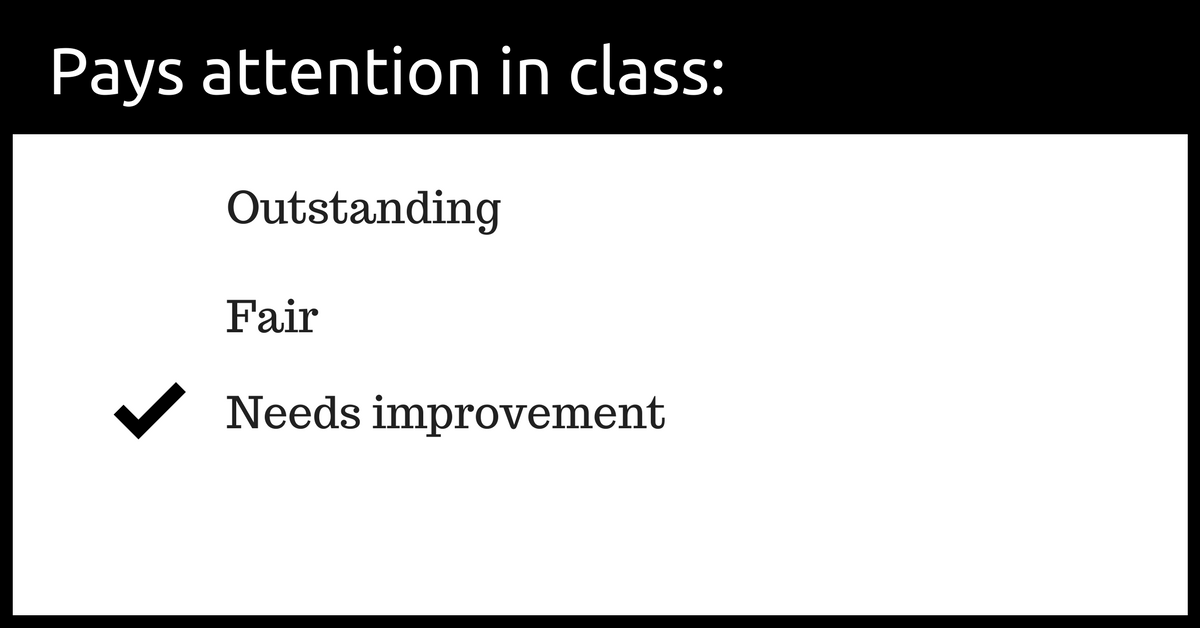
​How well do you pay attention?  Remember the grade school report cards?  When I was in elementary school, we were graded on whether or not we made good use of our time, or how well we pay attention in class?  It's not just kids who have problems paying attention.  Adults struggle, too.
 
Our amazing brains process sensory inputs automatically.  Most of these inputs are processed without conscious awareness.  The human depends on the nervous system to react automatically to the environment, especially a threat.  If the human consciously processed all sensory inputs before it acted, our species would be extinct.  This is the human condition.  It’s more than just having awareness. 
 
Some clergy can get themselves into serious trouble.  When clergy behave inappropriately it’s a problem for supervisors, and it can have a lasting impact on a congregation.  I used to believe that clergy (who got into trouble) lacked awareness.  Awareness is what boards of ordained ministry look for in candidates.  Some people are oblivious to the impact they are having on others, and the impact others are having on them.  But, it is not simply an issue of having awareness.
 
It is possible to “watch” (aka: have an awareness of) what is happening around oneself and still do what is automatic.  In a congregational meeting, one can be clear about what one wants to say but struggle to bring themselves to say it.  It can also be the case that one struggles not to say something that will be counterproductive to the meeting.  They say it anyway.  It's as if they cant help themselves.  Paying attention and acting in a way that is consistent with one’s awareness is a challenge.
 
Paying attention includes activities like observing, researching and thinking.  There is a process of observing.  It includes intentionality, motivation and curiosity.  It’s not in our nature to walk around every moment of every day observing the universe around us.  But when one is intentional, motivated and curious it can lead to agency and action.  
 
The greatest obstacle to the process of paying attention is the fear response.  I’m sitting in a coffee shop trying to pay attention as I write this blog.  Around me are sounds of children laughing, music playing, people talking on their cell phones, and bursts of sounds from the espresso machine.  On some days, I can tune all of it out and focus on writing.  On other days, it’s almost impossible to . . . to . . . to . . . focus.  Then there are days when my attention is somewhere in the middle.  What makes the difference?  The activation and chronic level of the fear response, the levels of cortisol and other stress hormones released in the body and the bodies ability to down-regulate this process. 
 
What triggers the fear response, how sensitive the response is, how quickly the response is engaged, how intense the response is, how quickly the response returns to baseline (if at all) and how chronic the response remains are all variables that are influenced by one’s family of origin.  What we pay attention to and don’t pay attention to is a family systems process.  Not from the past but in the present!  It is happening now, in real time.
 
Attention is on a continuum of human functioning.  At one end of the continuum are those who pay little to no attention to the universe around them.  They are wrapped up in their own little world. At the other end are people who can get overly fixated on just about anything.  I lead a drum circle with children and youth in my congregation.  The key to playing in a drum circle is the ability to focus on playing a unique rhythm while at the same time playing in sync with the other drummers who are playing a different rhythm.  If one listens too much to everyone else, they lose track of their rhythm.  If one listens only to oneself, they will be out of sync with the group.  It’s a balance. 
 
Chronic anxiety can shift attention either away from others or towards others.  As anxiety goes up in the relationship system, some people automatically move their attention away from others.  Their level of discomfort moves them to disconnect and to shift their focus away to other things.  For some, an increase in anxiety moves their attention towards others to control the behavior of others.  In the former, we say “I’m out of here.  Get away from me.”  In the latter, we say, “Stop doing that.  Do this.”
 
Differentiation of self makes a difference for those who struggle with paying attention.  Differentiation of self is not about disengaging nor is it about becoming consumed with the behavior (irritating as it may seem) of others.  It is about being aware of the impulse to do either and then to catch oneself.  It’s a disruption of the automatic response in self.  At one level, it is watching one’s behavior knowing that it is the result of synaptic signaling in the brain.  At another level, it is watching the anxious "charge" that is passed between people in a relationship system and observing how it influences behavior.  It is separating feelings from thinking and knowing where one stops and others begin.
 
Learning to pay attention is about slowing down one’s internal reactivity to others and being more thoughtful in the interactions with others.  To this end, it may be useful to create a timeline of a specific interaction with someone important in the family.  The timeline consists of mapping out who says what, when, where and to whom while at the same time tracking behavior.  This exercise can be useful in understanding shifts in attention.  When one says “X,” the spouse does “Y.”  When the spouse does “Y,” one of the kids does “Z.”  And so on.  By slowing down the interactions and mapping them out, it is possible to observe how attention shifts away from and towards others.  It is a system, so X, Y and Z are influencing each other at the same time.  
 
For anyone willing to pay attention to how the family works, there is a treasure trove of understanding and opportunities available to even the most novice of voyagers.  The adventure awaits!
Subscribe to receive the newest blog in your inbox every Monday morning.

SUBSCRIBE
2 Comments

The Mystery of Membership

2/18/2018

0 Comments

 
Picture
 
Why do people join your congregation?  Is it because of the relationships they’ve developed?  Or is it because of the shared beliefs of the congregation?  You may have an easy answer to these questions, but the answer is anything but easy to understand. 
 
The shared beliefs of a congregation are a significant reason why people become members.  I’ve had people tell me the reasons they like or dislike a congregation is because of the shared beliefs of the congregation.  Shared beliefs can be about anything: creation, how God works in the world, the authority of scripture, human sexuality, or positions on social justice.  I was asked to pastor a congregation where there were significant differences between their shared beliefs and my own beliefs.  I questioned whether I would be a good fit.  Beliefs matter and play a role in the decision to join a congregation.  But here is where it gets complicated.
 
The relationships we form in a congregation determine our level of participation.  Consider the committed leaders in your congregation.  Without having knowledge of them, I can predict they are deeply connected to the people in your congregation.  In other words, the congregation IS their primary friendship network.  A commitment to membership is determined by one’s ability to create meaningful friendships.  Members become friends with members.  And here is where we move beyond complicated to confusing. 
 
When I ask someone the question, “Think about the last time you consider leaving a congregation.  Was it because of the way people were behaving or because of a belief the congregation adopted or failed to adopt?”  Typically, the answer is both!  Or, if I ask the question, “If your closest friends decide to leave the congregation, do you stay or go?”, it’s difficult for people to answer.  Most of the time the answer is, “It depends.”  That’s because beliefs and relationships influence our decisions.  So, while we’d like to think the reason people join a congregation is because of shared beliefs, the reality is much more complicated.  In my tradition, the United Methodist Church, belonging precedes believing.  You don’t have to agree to a specific set of doctrines or creeds to participate.
 
When I consider my life journey from a conservative theological position to one that is progressive, I remember specific people who shaped my thinking.  I'd like to believe that it was their thinking and ideas that influenced me, but I know my relationship with them played an important role.  To be sure, it was their stories and narratives that had the greatest impact on me.  Stories and narratives are relationship builders.  Language is symbolic and registers at an emotional level.  Our beliefs often spring forth from stories and encounters which are first and foremost about relationships.  So, do you still "believe" that membership is mostly about beliefs? 
 
Just one more example of how relationships play a significant role in determining membership.  Critical mass impacts attendance and membership.  Congregational leaders know this.  It is easier to draw people to a sanctuary that is 80% full than to a sanctuary that is 10% full.  The more people you have filling the worship space, the easier it is to attract new people.  Beliefs do matter, but at the end of the day, people make the difference.
 
And now the final point that moves this conversation from confusing to a conundrum.  There is a growing segment of the population that is willing to end a long-term relationship over differences in beliefs.  As the population becomes increasingly polarized, it’s a challenge for people to relate to each other while believing different things.  I would argue that this has less to do with specific belief and more to do with the challenges of relationships.  It’s not the specific beliefs that are polarizing.  People struggle to remain in the relationship despite the differences.  Indeed, if it were truly about beliefs, we would actually be in a much better place as a country.  For myself, when I’m solid in my understanding of a belief I have less of a need to defend the belief when challenged or to require agreement from others when there is disagreement.
 
My hunch is that in today’s climate of polarization, congregations would do better to support their members to develop individual core beliefs and guiding principles.  Individuals are in a better position to relate to others when they are clearer about what they believe and how they think about the world and their relationship with God.  It's less about shared beliefs, and more about clarity of beliefs.  

The conundrum is that while most congregational leaders think people join because of the shared beliefs of the congregation, the truth is that it is more about the relationship system.  The challenge becomes supporting individual efforts to clarify and articulate core beliefs and guiding principles without losing members over disagreement.
 
Dr. Murray Bowen described the relationship process as part of the force for togetherness and the effort to have clear beliefs and guiding principles as part of the force for togetherness. He said it this way:
 
“A critical index of the functioning of an emotional system is the balance of the togetherness-individuality forces. The two forces exactly balance each other.  In a period of calm, the two forces operate as a friendly team, largely out of sight. . . . Any emotional system has an amount of togetherness, and a reciprocal amount of individuality, which constitute a life style or “norm” for that group.  Optimum functioning would be somewhere near a fifty-fifty balance, with neither force overriding the other and the system sufficiently flexible to adapt to change.”  Family Therapy in Clinical Practice, page 277.
 
As you make plans to grow your congregation, consider that membership is a 50/50 balance between a relationship process and beliefs (togetherness and individuality).  How can a congregation welcome new people with a balanced approach to cultivating both relationships and beliefs?  What beliefs are current members using as a resource to their functioning?  For current members, specifically those who articulate a positive congregational experience, how many connections (relationships) do they have in the congregation?  Do member who report a positive experience with the congregation place a larger emphasis on the relationships they have or the work they are doing on clarifying their beliefs?  What opportunities are available for individuals to develop relationships with other members?  What opportunities are available for individuals to clarify their core beliefs and guiding principles?
 
What questions come to mind as you consider membership in your congregation?
Subscribe to receive the newest blog in your inbox every Monday morning.

SUBSCRIBE
0 Comments

Why Your Committee Needs a Thinker

2/4/2018

0 Comments

 
Picture

What frustrates you the most about your congregation or organization?  Is the answer, meetings?  Yes!  Can I get an, “Amen!”  And yet, meetings are an essential part of a successful organization.  High functioning leaders contribute to organizational resiliency but so do committees and teams that are flexible and adaptable. 
 
When pressed, clergy will boil down the problem with a committee to one or two problematic people.  Clergy falsely assume they can either change the problematic behavior or force individuals off the committee.  I do not recommend either approach.  The reason is simple.  The problem is not in a person but in the relationship system.
 
Human behavior is predictable.  Over time, you can learn to predict how individuals will behave during a meeting.  Think for a moment about a committee.  Perhaps one that troubles your soul.  Imagine sitting at a table with the committee.  How does each person behave during the meeting?  What do they typically do or say?  How do they respond to problems?  How do they relate to each other?  Who are the people that get along or don’t get along?  Now include yourself in the mix.  How do you typically respond to each person on the committee?  There is a level of predictability regarding behavior. 
 
The emotional process, described above, can hijack the purpose of a committee.  Committees are challenging when they fail to do the very thing they are mandated to do: problem solve and take action.  While it may seem easier for a leader to make a decision without going through a committee process, current research indicates that the best solutions come not from one person but from groups of people.  So, if committees are essential to the life of a congregation, what do you with meetings that are tense and unproductive?
 
The tension generated in a relationship system (committee, team, task force) is equal to the inflexibility or inability of the system to adapt to a new challenge.  If the committee were functioning at a high level and solving problems with ease, the relative tension and anxiety would be low.  As tension and anxiety go up in the committee so do the predictable, reactive and automatic responses.  Automatic responses are like our “go to” response during a stressful situation.  We inherit these responses from the previous generations in our family.  They are like multigenerational behavioral patterns.  These automatic behavioral patterns become less reliable or useful when tension and anxiety are high.  To halt the automatic response, one must engage their thinking brain.  Thinking is required if a committee is to become more flexible and adaptable to new challenges. 
 
When a committee seems stuck, it doesn’t mean things are hopeless.  Leaders can engage in and promote a way of thinking that fosters flexibility and adaptation.  Higher functioning leaders can make a difference.  Notice I said, “higher.”  One does not need to have a high functional level to be an effective leader.  One only needs to function at a level higher than the group.  And by “leader,” I mean anyone, not just the chairperson of a committee.  Anyone can be a thinking leader when they work on differentiation of self. 
 
Leaders who function at a higher level are good thinkers!

  • Leaders pay attention to their level of anxiety.
  • Leaders pay attention to the tension in the committee.
  • Leaders pay attention to the relationship triangles.
  • Leaders work to develop a one to one relationship with each member of the committee.
  • Leaders work to separate their feelings from their thinking.
  • Leaders work to separate their thinking and feeling from the thinking and feeling of others.
  • Leaders disrupt their automatic responses in favor of a more thoughtful response.
  • Leaders challenge other people's automatic responses to a problem to either avoid or to panic. 
  • Leaders make use of the resources available to a committee. 
  • Leaders focus on facts.
  • Leaders articulate to the committee their observations, curiosity and questions.
 
What questions and observations do you have about the way a committee functions and the part you play in it? 
Subscribe to receive the newest blog in your inbox every Monday morning.
SUBSCRIBE
0 Comments

Why Transparency Is So Hard And What Leaders Can Do About It

1/28/2018

0 Comments

 
Picture

A member of the congregation is upset.  They are concerned about the finances of the congregation.  They go to the chair of the finance committee to request a detailed transaction report for the year.  You are the chair of the finance committee.  What do you do?
 
Transparency is a necessity.  Trust between a congregation and its leadership is essential.  Trust will quickly erode if there is a perception of secrecy or an accusation of mismanagement.  Even when a congregation is without conflict,  leaders can be reluctant to publish financial details.  So, what does transparency look like?
 
The first step in developing transparency is to adopt clear policies and procedures about the disclosure of financial details.  Having agreement on the following list is helpful:

  1. What information will be available to the congregation?
  2. How often will the information be provided to the congregation?
  3. How will the information be distributed?
  4. What information is considered confidential?
  5. Who will have access to confidential information?
  6. How will leadership respond to requests for information or general questions?
  7. How will leadership keep the congregation informed of financial details?
  8. How regularly will they be informed?
 
Without access to financial information, a congregation will fill in the gaps on their own.
​ 
Chronic anxiety is the perception of fear.  Without access to facts, we tend to worry about the “what ifs.”  Worry can feel real.  When people have access to facts they are in a better position to manage their worry.  To be transparent is to provide facts. 
 
Leaders may decide to withhold specific information to keep the congregation from worrying or because they fear the perceived response of the congregation.  But this assumes that the congregation doesn't have a clue about what's really going on.  In my experience, congregations are astute to perceiving anxiety in their leadership.  Humans have a way of communicating anxiety in subtle but detectable ways.  There is really no way to fool a relationship system.  People know when something is up. 

When members of a congregation sense the anxiety of leadership, it heightens their anxiety about the well-being of the congregation.  This back and forth, reciprocal process, results in an escalation of tension between leaders and members. The best way to address the problem is by communicating facts as they happen.  Prolonging bad news with the hope that people won’t know or find out is wishful thinking and it never ends well.
 
When leaders fear transparency, they often blame it on the congregation.  But it actually reveals the fear of the leaders.  Leaders are afraid to communicate details because they lack the capacity to confidently engage the anxiety of the congregation.  The fear response of the leader makes them more reluctant to be transparent which raises the level of fear of the congregation and increases the tension in the relationship system.  Leaders who are able to lean into the problems of an organization are able to find the solutions they need to move forward.  This is the work of differentiation of self. 
 
When leaders work on differentiation of self:

  • Leaders manage their own anxiety.
  • Leaders work with facts.
  • Leaders declare their intention and commitment to resolve problems.
  • Leaders think about the long-term goals of the organization.
  • Leaders disrupt reactivity and a short-term focus.
  • Leaders articulate a problem with facts, not emotional opinions.
  • Leaders articulate what they are up against in solving a problem with facts, not feelings.
  • Leaders anticipate the reactivity of others.
  • Leaders listen to and respect the various opinions of others.
  • Leaders step back to allow others to use their strengths and gifts.
  • Leaders do not disengage or give up but continue to engage the congregation in conversations in order to solve a problem.
  • Leaders readjust their thinking based on the responsible and fact-based feedback of others. 

Transparency is a relationship process.  It’s important for leaders, particularly clergy, to develop a one to one relationship with key members of the congregation.  A one to one relationship goes a long way in reducing tension in the relationship system.  
 
The best solutions for financial problems come not from leaders but from thinking congregations.  The test of any leader is the ability to share facts about a congregation’s finances without sharing their anxiety.  Problem-solving begins when leaders are willing to tone down their emotional intensity and reactivity to a problem.  When leaders lean into a problem, they discover that their congregation is a wealth of ideas and solutions.  When leaders give the congregation access to facts it goes a long way in helping a congregation solve whatever challenge they face.
0 Comments

3 Ideas That Will Improve Your Preaching

1/21/2018

2 Comments

 
Picture

Clergy develop and deliver roughly fifty-two sermons (fifteen to thirty minutes in length) year after year.  National surveys typically rank preaching as the number one reason people attend a congregation.  So, the pressure is on, and clergy know it. 
 
Effective preaching is both skillful and artistic.  The context of preaching is the community.  Without an awareness of the underlying relationship system of a community, the skill and artistry are lost in an emotional process.  Therefore, the three keys to effective preaching are:

  1. Effective preaching is based on core principles, values and beliefs.
  2. Effective preachers stay in good emotional contact with their members especially members who don't agree with their preacher or when the preacher disagrees with their members.
  3. Effective preachers work on self-regulation.
 
Most clergy make use of online and printed resources to prepare their sermons.  If clergy approach the process of developing a sermon with a clear set of principles, values and beliefs then a good resource can spur the preacher’s thinking.  Sometimes preachers use a resource to find specific content for their sermon.  But some use a resource as a substitute for thinking and may end up preaching someone else’s sermon.    
 
How a preacher makes use of a resource is connected to their level of clarity about core principles, values and beliefs.  Preachers become clear by sifting through their core principles, values and beliefs to determine which ones represent their best thinking and which ones represent the thinking of other people.  The core principles, values and beliefs that are sifted out from this process become the basis for the preacher's preaching.  I’ve come to a place in my preaching where I know when I’m preaching a sermon based on my thinking and when I’m preaching a sermon based on the thinking of others.  There is a notable difference.  And given the feedback I’ve received from congregants over the years, I know the congregation can tell the difference as well.  There is a difference in the way ideas are communicated when they come from self and when ideas are coming from someone else.
 
As congregations and the larger society become increasingly polarized, preachers are preaching to congregations that are divided over major issues.  In my tradition, the United Methodist Church, on any given Sunday my preaching will resonate with some and conflict with others.  Some will experience a sermon as supportive and encouraging and feel a connection to the preacher.  Some will experience a sermon as challenging and feel at odds with the preacher.  An awareness of this underlying relationship process can be useful to a preacher. 
 
The challenge for today’s preachers is developing the capacity to articulate a solid belief without perpetuating an already present polarization.  Preachers are at their best when they preach a sermon based on core principles, values and beliefs without permanently disrupting the relationships in the congregation.  It requires an effort of staying in good emotional contact with members or key leaders (depending on the size of the congregation) when they disagree with you, or when you disagree with them.  The opposite is also true that a strong, positive togetherness between the preacher and congregation can make it difficult for the preacher to articulate their core principles, values and beliefs. 
 
The best way to manage tension in the relationship system is to do a better job of managing self.  Self-regulation is at the heart of Dr. Murray Bowen’s concept of differentiation of self.  The forces for togetherness and individuality creates tension in the relationship system.  As people move away from or closer to others, anxiety goes up and down.  This process of managing anxiety by moving towards some or away from others at an emotional level can influence what a preacher says, does and feels.
 
During the development of a sermon, preachers are likely to experience their own worry and fears about what might happen if they actually preach what they are thinking.  An internal debate ensues about what to say, how to say it and what the consequences might be.  It’s not the case that preachers should always say whatever they are thinking.  What leads to more effective preaching is an awareness of the emotional process in the relationship system.  
 
The ideal place to become aware of the emotional process is in one’s family of origin.  There, one can begin to “see” the process of individuality and togetherness, and anxiety and tension in the system.  The more I work at this in my family, the more courage I have in my preaching.  The extent to which preaching has improved my ability to define a self in my family of origin is also worth consideration.
 
Here are some ideas to think about as you prepare to preach:

  • What ideas are you clear about?  What questions do you have?  
  • Present your thinking without the need for others to agree.
  • Present your thinking without being defensive.
  • Always consider how your congregation will respond.  Who will react to your thinking?  How will they react?  What will you say or do without reacting back? 
  • Develop a plan for relating to with those who react negatively and positively to your thinking.
  • If you greet people after the service, what does it look like to be emotionally neutral towards those who react negatively or positively? 
  • How will you do a better job of self-regulating your reactivity to the reactivity of others?

Remember, the overall goal is to represent one’s best thinking while staying in good emotional contact with the congregation, and to regulate self as anxiety and tension fluctuate in response to the counterbalancing forces of togetherness and individuality in the relationship system.
2 Comments
<<Previous
Forward>>

    Author

    John Bell is the thinker behind Thinking Congregations.  As a thought partner he believes the best way forward is for leaders to do their best thinking.

    Subscribe!
    Click here to receive the blog by email. 

    Archives

    February 2020
    April 2019
    March 2019
    February 2019
    January 2019
    December 2018
    November 2018
    October 2018
    September 2018
    August 2018
    July 2018
    June 2018
    May 2018
    April 2018
    March 2018
    February 2018
    January 2018
    December 2017
    November 2017
    October 2017
    September 2017
    August 2017
    July 2017
    June 2017
    May 2017
    April 2017
    March 2017
    February 2017
    January 2017
    December 2016
    November 2016
    October 2016
    September 2016
    August 2016
    July 2016

    Categories

    All
    Beliefs
    Change
    Chronic Anxiety
    Community
    Conflict
    Death
    Differentiation
    Emotional System
    Fear
    Individuality
    Leader
    Meeting
    Motivation
    Multigenerational Transmission Process
    Observing
    Over Functioning
    Process
    Projection
    Regression
    Togetherness
    Training
    Transition
    Triangle
    Under Functioning
    United Methodist
    Vision

    RSS Feed

Services

Blog
Coaching
Events


Company

About
Contact
© COPYRIGHT 2015. ALL RIGHTS RESERVED.