
Thinking Congregations
  • Home
  • Blog
  • Coaching
  • Events
  • About
  • Contact
  • Home
  • Blog
  • Coaching
  • Events
  • About
  • Contact

3 Ways We Are Motivated And Why It Matters

6/10/2018

0 Comments

 
Picture

If you lead a volunteer organization, your biggest challenge is not money.  Your biggest challenge is finding motivated volunteers.  And by motivated, I mean motivated to be responsible. 
 
Congregations are structured by committees.  Committees are lead by volunteers who support the mission of the organization.  But not every volunteer is motivated to do the work.  So, congregations are often a mix of committees where some function at a higher level while others struggle to accomplish their objectives.  What makes the difference?  It is the motivation of the volunteers. 
 
There are basically three ways people develop motivation.  The first two are about external motivating factors.  We all find motivation and inspiration from other people.  People who are charismatic can often motivate the unmotivated.  This is why charismatic leaders are so popular.  The second way people are motivated is when they become uncomfortable with the way things are.  If one is uncomfortable with the direction (or lack thereof) of an organization, they become motivated to make things better.  Like the first example, this is an external motivator because the motivation is based on a perceived assessment of the organization. 
 
Dr. Murray Bowen observed this external process of motivation in the family.  He described it as an over/under reciprocity or over/under reciprocal functioning.  The basic idea is that behavior occurs reciprocally in a relationship system or emotional unit (like the family).  Bowen observed that one spouse will overfunction, and the other spouse lets them overfunction.  The more one does for the other, the less the other does for them self.  These same patterns are extended to other relationship systems.  If one’s tendency is to underfunction in the family, they will more than likely bring this same pattern to the congregation.  If a leader underfunctions on a committee, others on the committee may find themselves taking on more responsibility (doing the things that leader can do).  If a leader overfunctions in the family, in the committee they may take on more responsibility than is needed. 
 
It’s helpful to note that anxiety drives this reciprocal process of over/underfunctioning.  As one becomes consumed with worry and fear, other picks up the anxiety and each person shifts into doing either more or less.  The reactivity to anxiety to do more or do less is the product of a multigenerational family emotional process.  In a way, one learns these patterns from one’s family of origin over the generations.  The reactivity is automatic in the sense that very little thinking and awareness go into this response.  It just happens.
 
The third example of motivation is what Dr. Bowen identified in the concept of differentiation of self.  When an individual is clear about core principles and a life direction, they are motivated to do the work.  It is an internal motivation because it comes from within the self.  This type of motivation is not determined by the motivation (or lack of motivation) of others but instead is based on a clear understanding of one’s beliefs and direction.  The focus of this type of motivation is less on others and more on self.  However, it is not selfish.  In fact, this type of motivation enables one to be more available to others. 
 
In congregations, some people use the word motivation and calling interchangeably.  To find motivation is to rediscover one’s calling into ministry.  Again, one's “calling” can be caught up in the reciprocal back and forth process of the relationship system.  One might feel called in response to what others are doing or not doing.  A true calling is something one pursues with or without others.  Leadership can be lonely.
 
When an organization is full of motivated people, the work they do together is less complicated.  When I think back on the many years my kids played soccer, it was easy to tell which kids were motivated to play.  The motivated kids excelled and were able to step up when challenged.  Less motivated kids depended more on the coach.  They did not excel as quickly.  A good coach can tell which players are motivated and then knows how to both motivated and train their players.  In a congregation, a pastor can tell who is motivated and who needs to be motivated.
 
The congregation I serve created a new process to identify motivated leaders.  If someone is interested in serving on the top leadership team, they must go through an application process.  Applicants fill out a form and provide written answers to questions.  The questions are designed to help an applicant reflect on their motivation for serving, consider their gifts and talents, and discern if they are called to be on the leadership team.  Once the application is completed, applicants are then interviewed. 
 
For many years, the process of filling a volunteer leadership position in the church was accomplished by externally motivating people to serve.  It’s sometimes referred to as arm twisting.  The result often left unmotivated individuals sitting in positions of responsibility accomplishing very little.  This new process addresses the problems with motivation.  Is this person applying for a leadership position because the congregation needs someone in that position or because the individual is self-motivated to do the work?  And if they are motivated, is it because the work is important to them or because they are anxious and worried about the organization?  The answers to these questions can have different outcomes.
 
The ideal candidate for a volunteer position in the church is someone whose personal goals, beliefs, and life direction is in line with the congregation's goals, beliefs and direction.  There may be differences over the details.  But in general, what is important to the individual is important to the congregation.  In this way, the calling (and motivation) of the individual supersedes the needs of the organization.  The individual will pursue what motivates them whether the congregation accepts them as a volunteer or not.  One could make the case that a thriving congregation is simply a collection of individuals who are self-motivated to pursue their calling in life.  And to that, I say Alleluia!  Amen!
Subscribe to receive the newest blog in your inbox every Monday morning.
SUBSCRIBE
0 Comments

Peter L. Steinke

5/13/2018

1 Comment

 
Picture

My introduction into Bowen Family Systems Theory came through Rev. Peter Steinke.  It was at a workshop in Madison, WI around the time his second book Healthy Congregations was published.  I attended the conference at the invitation of a staff member of my annual conference.  

As a not-quite-ordained pastor, fresh out of seminary, the ideas and concepts Steinke presented made sense.  He gave language to a reality I knew intuitively.  I remember writing down the phrase, "Good leadership rises above the anxiety of the group."  I carried it around with me for months.  That one simple phrase propelled me into twenty years of learning Bowen Family Systems Theory.

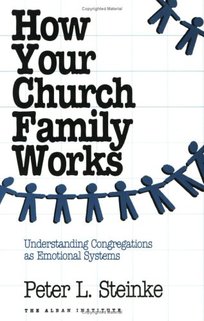
Peter Steinke was a "student" of Rabbi Ed Friedman.  In the preface to the 2006 reprint of the How Your Church Family Works (originally published in 1993), Steinke writes, "In 1991, I asked him (Friedman) why he didn't abridge his book Generation to Generation and write a short version of it so that it could be available to more people.  He saw no need to do it since the book had had multiple printings.  'You,' he said to me, 'could write the short version.' With his encouragement, I contacted the Alban Institute and How Your Church Family Works was written."

I learned a few years go, at a conference attended by Steinke and hosted by the group Voyagers that Steinke's initial exposure to theory was through Ron Richardson.

After attending the Madison conference, I read all of Steinke's published works.  Soon after receiving a flyer in the mail from a local organization, I attended a Healthy Congregation seminar based on the writings of Steinke.  I'll save the rest of the story for another blog post.

Like the other authors I've highlighted (see the last two blog posts), it's impossible to find just one section of Steinke's writings to represent his works.  I selected an excerpt from his first book, How Your Church Family Works.  As I've read Steinke, and listened to him speak over the years, I've been struck by his desire to connect theology and systems thinking.  

This excerpt is taken from the last chapter, "Believing and Belonging" and the section on "Response and Recovery."  He writes:
"Systems theory provides no magical answers," Murray Bowen remarks, "but it does provide a different way of conceptualizing human problems."  We learn that in relationship we do not act completely on our own "steam."  Nor do we always express ourselves, simply because of our "nature."  Environment is always an influence. "It is the context," Gregory Bateson contends, "that fixes meaning."  We are constantly influencing the behaviors of others and likewise being influenced by them.  Looking at what takes place between people, we observe the reciprocal influences and the mutual reinforcement of functioning positions.  This does not mean that there is no sense of individual responsibility.  If anything, system thinking elevates the need to be responsible. Individually, we decide who will or will not be allowed in our personal space, what we will stand for and what will not be tolerated, and how far or close the sphere of influence will be negotiated.  Being responsible, for example, we set our own limits, not someone else's.  We regulate our own anxiety rather than assigning it to others in the form of criticisms or fault-finding.  We look at how we can change ourselves instead of how we can force or manipulate others to make changes in themselves.  This is more than psychology.  It goes to the very core of creation theology, that we are created to be responsible creatures.  One of the words that church has used to distinguish responsible living is "stewardship."  A stewards is a  manager of what is given.  Our primary responsibility is the management of our own life and the relationships we form - anxiety and all.

Subscribe to receive the newest blog in your inbox every Monday morning.
SUBSCRIBE
1 Comment

Ronald W. Richardson

4/29/2018

2 Comments

 
Picture

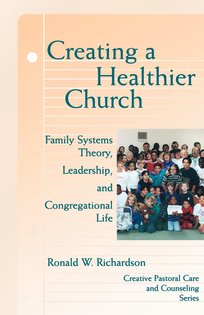
For the next few weeks, I'll be featuring excerpts from authors who have applied Bowen Family Systems Theory to congregational systems and leadership.  We begin with Ron Richardson who was the first faith leader to write a book about Dr. Murray Bowen's theory of human behavior.  Creating a Healthier Church (1996), while not his first book, was an important contribution to  faith communities.

The following excerpt is taken from page 182-183:
Working on one's own level of differentiation is not about salvation.  Salvation is not something we do anything to achieve; it is a free gift based on God's grace and love for us.  It is not based on any act of ours, and being either more fused or more differentiated does not affect, in the slightest way, God's stance toward us.

Becoming a more differentiated self might be included in our concept of sanctification.  This is a process through which we more and more take on the nature of Christ through the active presence of God's Holy Spirit.  This requires our participation, or "working out your own salvation," for it is God at work within us (Phil. 2:12-13).  This process of realizing one's salvation by God, of more actively being a member of Christ's body in the world, is vastly strengthened by one's ability to be a more differentiated self.

So differentiation may be considered a requirement for our own spiritual growth as Christians.  We may have essentially "correct beliefs," but without the ability to be more differentiated, we will not be able to act consistently on these beliefs.  The better differentiated we are, the more we can behave in ways consistent with our own professed beliefs.

Murray Bowen, who was not a religious man, once said it would be hard to find a better definition of differentiation than the prayer of St. Francis of Assisi:

Lord, make me an instrument of your peace;
Where there is hatred, let me sow love;
Where there is injury, pardon;
Where there is doubt, faith;
Where there is despair, hope;
Where there is darkness, light, and
Where there is sadness, joy.

O Divine Master,
Grant that I may not so much
Seek to be consoled as to console;
To be understand as to understand;
To be loved as to love;
For it is in giving that we receive;
It is in pardoning that we are pardoned;
And, it is in dying that we are born to eternal life.

On another occasion, addressing a group of religious leaders, Bowen said:

"A major quality in the differentiation of self is complete selflessness in which "doing for others" replaces selfish personal goals.  Jesus Christ has been a model of total selflessness . . . A well differentiated self has to get beyond the selfish promotion of self.  One has always to be aware of "the other."

"Selflessness" does not mean "no-self" but the ability to have a larger, more objective view of things, where self is not at the center.  In other words, differentiation is a way to humility, as well as to wisdom.  


​
Subscribe to receive the newest blog in your inbox every Monday morning.
SUBSCRIBE
2 Comments

How I Overfunction At Funerals

4/22/2018

0 Comments

 
Picture
NASA HQ PHOTO 
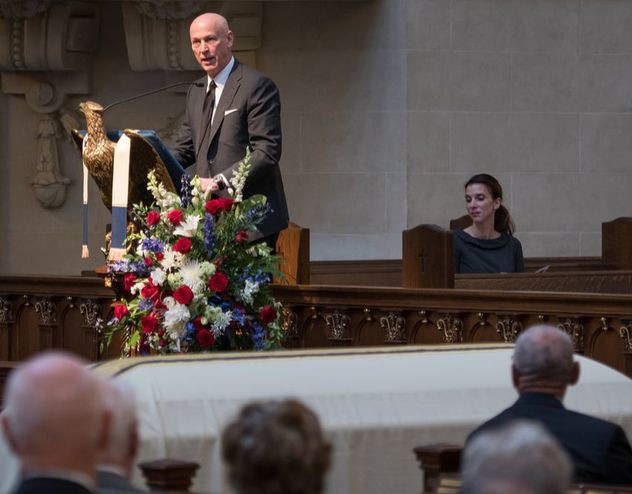
Clergy and congregational leaders play an important role in supporting families before a funeral.  There is variation in the way families prepare for a funeral service.  Some families need more support than others.  When someone dies, families have an opportunity to step up their level of functioning.  Clergy can learn to do a better job of managing their anxiety and not overfunction for others.
 
I see variation in the ability of families to plan a service.  Some families, because of the leadership of one or two individuals, have a clear idea of what needs to happen and are open to the ideas of others.  On rare occasions, the one who dies leaves behind ideas for the service.  Other families struggle to pick hymns and scripture readings.  When families struggle, it’s tempting for clergy to overfunction.
 
My practice (when meeting with the family to plan a service) was to invite family members to tell stories about the person who died.  This experience, common for most clergy, was therapeutic for families and provided me information for the sermon.  As one family member after another talked, I’d take copious notes of the stories, themes, and images they shared.  By the end of the conversation, I’d gathered enough information to give a sermon and a eulogy.  My notes would include important life principle, beliefs and favorite activities.  Some family members would volunteer to speak.  But most families were fine with me pulling it all together for them.  Back at the office, I’d work my preaching magic to weave together a meaningful and memorable message about the person’s life.  I was really good at it. 
 
A few years ago, I faced the reality that I was sharing stories about people I didn’t know personally.  It’s common for pastors to preside over the funeral of someone they don't know.  People don’t wait for you to get to know them before they die.  Although in one congregation, a member insisted I meet her the week I arrived because she was convinced she was going to die.  She did not want a stranger officiating at her funeral!  She lived for many more years and was still alive when I left.  Sometimes clergy are invited to officiate at the funeral of a spouse of a member who didn’t attend church.  I addressed these realities by being clear about my relationship to the person and acknowledging that there are family and friends who knew them better than I did. 
 
Eventually, I came to the realization that in my sermon/eulogy I was telling stories that belonged to other people.  The stories were their stories to tell, not mine.  So, I quit this practice.  I began to invite family members to speak at the funeral service.  The response was varied.  Then and now, their responses fall into two categories.
 
In the first category, families can identify with ease individuals to speak.  In the other group, families struggle to find one person to give a eulogy.  I encourage families to find at least one person to speak about their relationship with the person who died.  More if possible.  People vary in how they use their time. Some people talk directly about their relationship with the person who died.  They share experiences and insights into the relationship.  Other people become a “spokesperson” for the family, collecting stories and experiences to share.  That was the role I stopped playing.
 
For my part, the focus of my sermon is to articulate what I know and don’t know about death and the mysteries of life.  If I have a relationship with the person who died, I talk about it but avoid making comments from other relationship angles.  The sermon includes observations of the strengths of the family as they come together to support one another.  I speak about the intersection of faith, life and death with an effort to be as clear as I can.  Each funeral is an opportunity to clarify these things and to learn how to sit with questions and the mysteries of life. 
 
My observation after doing this project for several years is that families do better, especially family members who stand up and speak about their relationship with the person who has died.  Speakers have little trouble making it through the service.  There is some variation but, in general, it’s true.  One might want to debate that those who agree to speak already have the capacity to speak.  I’ve observed individuals, who were resistant to speaking, even struggling for a day or two with what to say, come around and speak at the funeral with what I would call ease.  I originally found this observation to be counter-intuitive.
 
Funerals have new meaning for me.  They are an opportunity to define a self.  Inevitably families push back at the invitation to speak.  Some resist and try to pressure me into reading what other people write, asking me to be the spokesperson for the family.  I evaluate these requests on a case by case basis.  There have been times, not very often, when I’ve agreed to it when the circumstances call for it.  Typically, though, families can identify at least one person (sometimes in the extended family) who will speak about their relationship with the person who has died.  My observation is that families get more out of these eulogies. 
 
The shift in my focus has been a worthwhile challenge.  When I don’t know the person who has died (and so I don't speak about them), it’s an opportunity to clarifying my thinking about death and dying which has not been easy.  I can do a good job pretending I know something about death.  Opportunities to think about death, life, faith and relationships have given me a place to stand as I engage my family about these important issues. 
 
At the end of the day, it’s about responsibility.  What is a pastor or congregational leader responsible for at a funeral?  How do clergy overfunction in the face of the anxiety and grief in a family?  How does overfunctioning undercut the functioning of others during the grieving process?  What are the benefits and challenges of being clear about what one is willing to do and not willing to do?  These are questions I’ve considered?  What questions come to your mind?
Subscribe to receive the newest blog in your inbox every Monday morning.

SUBSCRIBE
0 Comments

When You Know You're Right, How Do You Know When You're Wrong?

4/8/2018

0 Comments

 
Picture

All experiences are technically memories.  Your phone rings.  You hear it but only a millisecond or two after it rings. That’s the amount of time it takes for sound to travel through time and space to your ear and then travel from your ear to your brain.  Don’t forget it takes time for the brain to identify the sound from memory or to label it as a new sound.  Either way, the interaction with my memory lets me know, “My cell phone is ringing.”  Just because this process is quick (the quickest of the senses) doesn’t mean it’s free from error.  In fact, our perceptions (a combination of senses and processed memory) can betray us.  This raises the question, “When you think you're right, how do you know when you’re wrong?”
 
Not a day goes by that I don’t run into this problem with perception.  I remember an event differently than someone else.  I heard something different than what was intended.  I clearly articulate a point that is not understood by someone else.  I interpreted someone’s actions inaccurately.  I know I'm not alone.  All humans struggle with perception.  
 
The challenge of seeing the world as it is, not how we want or wish it would be, is a humbling and confusing process.  Humbling in the sense that I’d like to think my perception of the world is always on point.  Confusing in the sense that if my perceptions are skewed, how then do I engage the world (and those who live in it)?  How do I know when my perceptions are accurate?  How often am I accurate?  Can I ever be confident that the way I perceive the world is accurate?  How do I know when I’m wrong if I think I’m always right?
 
 
Language
 
Language is a good example of how memory and perception alter reality.  Language is symbolic, so words mean different things to different people.  At a recent city hall meeting, a white alderman referred to the renewal date of a city policy as “sundown.”  In the African-American community, “sundown” is a reference to something completely different.  It refers to the discriminative practices of a local government to arrest and mistreat African-Americans who remain in “white” cities after sunset. 
 
Words matter.  So do efforts that clearly define the usage of a word.  Humans are social creatures and language is essential to collaboration.  What does it take to describe the world accurately?  What are the challenges of using language to describe reality accurately? 
 
 
Those Crazy “Flat-Earthers” And Other Scientific Matters
 
Before the time of Socrates, scientists have understood the earth to be round.  And yet, the flat earth theory lives on, even experiencing something of a resurgence.  The earth cannot be flat and round at the same time.  It is, however, possible to perceive it as either flat or round.   So, what is real?  If you are convinced the earth is round, how do you know you are right?  I, too, believe the earth is round.  But my point is this.  When you believe you're right about the natural world, how do you know when you're wrong?  You may think those flat-earthers are crazy but what’s different about them?  To what extent are you free of the perceptive problems inherent to all human experience? 
 
 
Issues of faith
 
While issues of faith are sacred, people of faith categorize beliefs into two categories: crazy beliefs and reasonable beliefs.  It’s easy for people of faith (and even those who have no religious affiliation) to point the finger at the Jonestown Massacre and declare that their faith was misplaced.  Even, perhaps, crazy.  However, we all profess faith in something.  Granted, a “reasonable” faith (whatever that is) may not ask you to follow blindly into death.  But many faiths require the faithful to make a sacrifice.  What makes one faith expression right and another wrong?  How do you know that your faith holds the “truth” and  others do not?  When you know you are right about the way you see the world, how do you know when you are wrong?
 
And it’s not just an issue between faith communities.  Within communities, denominations, etc., people disagree about interpretation and the requirements for faithful participation.  When you believe your interpretation and practice are right, how do you know when you get it wrong?
 
 
The Force For Togetherness
 
Facts can get washed away in the sea of emotional process.  My desire to be connected with other important people and to participate in a meaningful relationship system can skew my ability to experience reality accurately.  Dr. Murray Bowen had an amazing way of articulating how our thinking system can be overridden by our feeling system.  In this way, the need to agree (to be fused together) outweighs the need to be accurate.  It can work the opposite way as well.  People who are too close will disagree about what’s real to create distance between them.  It is less about being accurate and more about managing the anxiety in self and in the relationship system.
 
The emotional process is driven by fear.  One-way the relationship system addresses a perceived fear is through a strongly articulated position that demands compliance by others.  You are either with us or against us.  We are right, and they are wrong.  They are the devil, and we hold the truth from God.  Horrible things have happened in the name of religion and science in response to perceived fears.  War, research and public policy that made sense at the time was based on inaccurate perceptions.  Again, when you know you're right, how do you know when you're wrong?
 
So, how do we align perception with reality?  It’s a process.  One that takes time, often years.  It is what Dr. Bowen called an effort towards differentiation of self.  It's the ability to see what “is” while staying connected to meaningful others.  For me, I’m clear about a couple of things.  You can call them beliefs and core principles.  I base my actions on them.  When I’m afraid or am surrounded by people who are afraid, these beliefs and principles guide me.  It may not be much, but it helps me get through the day. 
Subscribe to receive the newest blog in your inbox every Monday morning.

SUBSCRIBE
0 Comments

A Better Way To Think About Discipleship

3/25/2018

1 Comment

 
Picture

I wrote this blog in the hope that I might clarify for myself what a discipleship program looks like in a higher functioning congregation.  In the Christian church, a discipleship program is a process by which a congregation teaches children and adults the shared beliefs and values of the congregation.  This blog took several twists over the last few weeks as I thought about discipleship.  What I’m publishing here for you is not a conclusion but my reflections on the intersection of beliefs and relationships.  There is more to think about, and I will more than likely keep writing about it.  It’s worth a closer look.
 
All congregations, regardless of their faith expression, provide religious education.  The shared beliefs and values of the congregation are passed on to children and adults.  From within this educational system, leaders emerge who teach and train other children and adults the shared beliefs and values of the congregation.  This process works well until individuals question these shared beliefs and values or promote ones that are contrary.
 
For congregations that promote independent and critical thinking, there is an inherent risk that such an effort may create problems for the congregation.  As leaders grapple with this dilemma of how flexible they will be in the face of different beliefs or values, they may become stuck in an emotional process. 
 
If you have ever tried to hold a belief that is contrary to the congregation you belong to, you have probably experienced this emotional process.  You can “feel” the tension that is created both internally as one grapples with separating thoughts from feelings, and externally as one tries to navigate the relationship system while holding beliefs that are different than the shared beliefs of the congregation.  There is wide variation in the flexibility of congregations to think differently about certain beliefs while staying connected.
 
Dr. Murray Bowen described what he observed as a life force for togetherness that is common among all humans and all of life.  It is a counter-balancing force to individuality which is the effort to think, feel and act for oneself.  The force for togetherness disrupts this effort in favor of fusing together the thinking, feelings and actions of the group (in this case a congregation but also includes the family).
 
The extent to which a congregation can be at ease with variation in beliefs among congregants is dependent on, among other things, the level of chronic anxiety in the congregation.  The higher the level of anxiety, the more likely there will be demands for everyone to agree with what I’m calling shared beliefs.  At this elevated level, there is little room for disagreement.  People’s thinking becomes fused.  When leaders insist that everyone think the same way about God and issues of faith, it’s a good indicator of the level of tension in the congregation and the chronic level of anxiety among leaders.  Families (of which congregations are a conglomerate of) also experience this phenomenon. 
 
It is true that shared beliefs define a congregation.  Even congregations that participate in interfaith opportunities have shared beliefs about interfaith experiences.  So, to some extent, there is no escaping the need for shared beliefs.  They serve a functional purpose for humans. 
 
The assumption, though, that society will collapse into chaos if people believe and value whatever they want is false.  It is a byproduct of anxiety.  It is an incomplete understanding of the process of being a good thinker.  Supporting an individual’s effort to define and clarify their beliefs does not spur debate, conflict and schism.  Societal problems are not caused by “free thinkers.”  Societal problems are the result of an over-insistence (an anxious focus) that everyone think the same way.  The more congregational leaders demand compliance on specific beliefs and issues of faith, the more revved up and anxious the congregation becomes and vice versa.  It can also work the other way.  Take for example political coalition building.  Bringing together people who think differently can be an anxious process. 
 
The history of humanity is littered with examples of the struggle to either insist that everyone believe the same thing or everyone believing whatever they want.  If leaders strongly insist that everyone believe the same way, then people react and demand freedom.  If leaders strongly encourage independent beliefs and values, then people clamor for shared beliefs and values.   
 
So, what does any of this have to do with discipleship?
 
My original intent for this blog was to consider what a robust discipleship program might look like.  For now, I believe a robust discipleship program takes into consideration the following:
 
First, beliefs are inherently caught up in a relationship process.  The work of clarifying core beliefs and principles requires an understanding of emotional process.  As fear increases, there is a greater demand on individuals in a relationship system to feel, think and act the same way. 
 
Second, it is possible to hold a core belief and engage others who think differently without conflict, debate, and schism.  This can happen to the extent an individual works on differentiation of self.  When one is working to develop core beliefs and principles one inevitably bumps up against the reactivity in the relationship system.  This becomes an opportunity to be both separate and connected, a fundamental aspect of Bowen’s concept of differentiation.  Beliefs are not what bring us together.  Beliefs are what enable us to be together. 
 
I hope one day to design a class (sooner than later) that will invite individuals to work on defining their beliefs.  Such a class will encourage thinking about the following questions:

  • Where did a specific belief come from?  Self?  Others?
  • When was the belief adopted?
  • How does the belief serve one well?
  • When was one unable to live out the belief?
 
This effort begins with leaders who are good thinkers.  Clergy find opportunities through preaching, teaching and conversations to define and clarify their beliefs.  At the same time, they invite others to define and clarify their beliefs.  How might leaders encourage themselves and others to work on clarifying beliefs? 
 
A marker of progress in this effort is the ability to articulate a belief without feeling compelled to defend or attack others with their belief.  A clearly defined belief helps one navigate the problems of life by providing room for flexibility and adaptability as one responds to new challenges.
 
Dr. Bowen envisioned the theoretical characteristics of a “differentiated” person when he wrote:
 
These are principle-oriented, goal directed people who have many of the qualities that have been called "inner directed." They begin "growing away" from their parents in infancy. They are always sure of their beliefs and convictions but are never dogmatic or fixed in thinking. They can hear and evaluate the viewpoints of others and discard old beliefs in favor of new. They are sufficiently secure with themselves that functioning is not affected by either praise or criticism from others. They can respect the self in the identity of another without becoming critical or becoming emotionally involved in trying to modify the life course of another. They assume total responsibility for self and are sure of their responsibility for family and society. There are realistically aware of their dependency on their fellow man. With the ability to keep emotional functioning contained within the boundaries of self, they are free to move about in any relationship system and engage in a whole spectrum of intense relationships without a "need" for the other that can impair functioning. The "other" in such a relationship does not feel "used."   Family Therapy in Clinical Practice, Page 164
 
What are the benefits and challenges of developing a discipleship program that encourages and models differentiation of self?
Subscribe to receive the newest blog in your inbox every Monday morning.

SUBSCRIBE
1 Comment

Change Your Life in Less Than A Second

3/18/2018

3 Comments

 
Picture

When it comes to behavior, do we have a choice or is it automatic?  It turns out that our behavior is more automatic than we’d like to admit.  Way more.  But we are not always at the mercy of automatic behavior.  We can do something about it.
 
New research out of Johns Hopkins University suggests we have about a half a second to stop our automatic behavior.  It takes approximately a half a second for signals from a sensory organ (like the eyes) to be sent and processed by the brain and for a subsequent signal to be sent to a muscle.  So, yes, there is potential for choice when it comes to behavior, but the window is small.  It is a half a second small.  With the challenge set before us, there are steps one can take to disrupt automatic responses.
 
If we think of the brain as made up of multiple systems, there are at least two important systems that influence behavior.  There is an emotional system which includes all of our automatic behaviors.  For example, the regulation of the body and the natural ability to be social.  When someone smiles at you, it’s likely you will automatically smile back.  Try it today.  Smile at people and see if they smile back.   That's the emotional system at work.
 
Another system is the thinking system.  This includes the prefrontal cortex and other structures that influence the expression of a self.  For example, having one’s own thoughts, feelings and actions is an expression of self. 

Anxiety affects how these two systems operate.  When anxiety is high, it can undermine the thinking system in favor of the automatic, emotional system.  That’s not always a bad thing, especially if one is in imminent danger.  It also works the other way.  The thinking system can override reactive, automatic behavior which results in a decrease in anxiety.
 
Why does this matter?  Well, let’s say you are the leader of a committee.  You dread having to lead this particular committee.  A couple of people are creating problems for the group.  You have an automatic way of addressing the behavior.  While your automatic response may have initially made a difference, it no longer works.  In fact, the problem is getting worse.  The meetings are tense, and you can feel the tension in your body before the meeting starts.

One can disrupt one's automatic response by engaging the thinking system.  While we may only have a half a second to change course, in the heat of the moment, you really can’t do much of anything.  So, to make good use of that half a second, one needs to step back and strategies how one wants to behave. 

So, let's take the previous example and start from the beginning.  Someone says something in a particular tone and in a particular manner, and you are off to the races.  How can one prepare to not react automatically and behave differently?  The preparation includes the following:

  1. Identify the trigger.  Is it the words, the tone of voice, the level of intensity or a particular body movement?
  2. What happens to me internally?  What do I feel, think, and want to do?
  3. What do I do automatically in response to the trigger?  Do I say something, do something, walk away or shut down?
  4. What does a mature response look like?  How many alternative options can I come up with?  (Hint, there is always more than one option.)
  5. What will it take to disrupt my automatic response and respond with thinking?
  6. How do I predict others will respond to my thinking?
  7. What will my response be to the automatic reactivity of others?
 
We can also use this approach with the family.  Again, we don’t like to admit it but our behavior towards the family is mostly automatic and at times reactive.  It is not a bad thing to react automatically to one’s family.  When a baby is hurt and starts to cry, mom and dad move towards the baby and pick it up.  It’s what we do.  The problem comes when an automatic response creates additional problems.  For example, when the baby learns to cry to be picked up. 
 
Where do our automatic responses come from?  They have their origins in past generations.  A specific behavior may have started in your great-grandparent's generation or in a previous generation.   The dance of automatic patterns between spouses, parent and child, and siblings have been passed down from generation to generation, a process Dr. Murray Bowen called the multigenerational transmission process.  Recent discoveries in epigenetics have confirmed that how one responds to a particular life challenge is passed on to the next generation.  These responses become automatic behaviors in subsequent generations.  The good news is that it is possible to redirect one's behavior away from these automatic, generational patterns of reacting and shift one's behavior towards differentiation of self. 
 
So, as you prepare to take advantage of that half a second you have between doing what comes automatically and deciding to do something different, consider the following questions:

  • What am I trying to accomplish with my life?  What are my life goals?  What is my purpose and mission in life?
  • What is a core belief I can use to guide my thinking?
  • What can I do to calm down when I’m anxious? What can I do when I feel all revved up inside? What can I do when everyone else around me is revved up?
  • What does a more responsible version of myself look like?
 
What questions or opportunities for thinking can you add to this list?
Subscribe to receive the newest blog in your inbox every Monday morning.
SUBSCRIBE
3 Comments

Paying Attention.  It's More Important Than You Think

3/4/2018

2 Comments

 
Picture

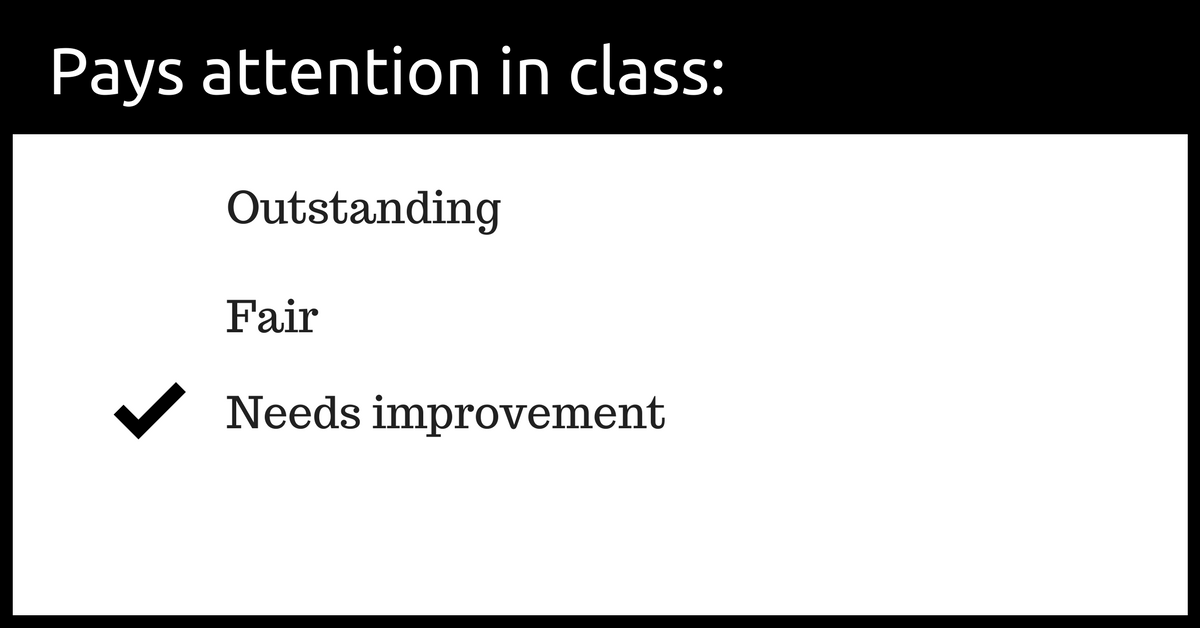
​How well do you pay attention?  Remember the grade school report cards?  When I was in elementary school, we were graded on whether or not we made good use of our time, or how well we pay attention in class?  It's not just kids who have problems paying attention.  Adults struggle, too.
 
Our amazing brains process sensory inputs automatically.  Most of these inputs are processed without conscious awareness.  The human depends on the nervous system to react automatically to the environment, especially a threat.  If the human consciously processed all sensory inputs before it acted, our species would be extinct.  This is the human condition.  It’s more than just having awareness. 
 
Some clergy can get themselves into serious trouble.  When clergy behave inappropriately it’s a problem for supervisors, and it can have a lasting impact on a congregation.  I used to believe that clergy (who got into trouble) lacked awareness.  Awareness is what boards of ordained ministry look for in candidates.  Some people are oblivious to the impact they are having on others, and the impact others are having on them.  But, it is not simply an issue of having awareness.
 
It is possible to “watch” (aka: have an awareness of) what is happening around oneself and still do what is automatic.  In a congregational meeting, one can be clear about what one wants to say but struggle to bring themselves to say it.  It can also be the case that one struggles not to say something that will be counterproductive to the meeting.  They say it anyway.  It's as if they cant help themselves.  Paying attention and acting in a way that is consistent with one’s awareness is a challenge.
 
Paying attention includes activities like observing, researching and thinking.  There is a process of observing.  It includes intentionality, motivation and curiosity.  It’s not in our nature to walk around every moment of every day observing the universe around us.  But when one is intentional, motivated and curious it can lead to agency and action.  
 
The greatest obstacle to the process of paying attention is the fear response.  I’m sitting in a coffee shop trying to pay attention as I write this blog.  Around me are sounds of children laughing, music playing, people talking on their cell phones, and bursts of sounds from the espresso machine.  On some days, I can tune all of it out and focus on writing.  On other days, it’s almost impossible to . . . to . . . to . . . focus.  Then there are days when my attention is somewhere in the middle.  What makes the difference?  The activation and chronic level of the fear response, the levels of cortisol and other stress hormones released in the body and the bodies ability to down-regulate this process. 
 
What triggers the fear response, how sensitive the response is, how quickly the response is engaged, how intense the response is, how quickly the response returns to baseline (if at all) and how chronic the response remains are all variables that are influenced by one’s family of origin.  What we pay attention to and don’t pay attention to is a family systems process.  Not from the past but in the present!  It is happening now, in real time.
 
Attention is on a continuum of human functioning.  At one end of the continuum are those who pay little to no attention to the universe around them.  They are wrapped up in their own little world. At the other end are people who can get overly fixated on just about anything.  I lead a drum circle with children and youth in my congregation.  The key to playing in a drum circle is the ability to focus on playing a unique rhythm while at the same time playing in sync with the other drummers who are playing a different rhythm.  If one listens too much to everyone else, they lose track of their rhythm.  If one listens only to oneself, they will be out of sync with the group.  It’s a balance. 
 
Chronic anxiety can shift attention either away from others or towards others.  As anxiety goes up in the relationship system, some people automatically move their attention away from others.  Their level of discomfort moves them to disconnect and to shift their focus away to other things.  For some, an increase in anxiety moves their attention towards others to control the behavior of others.  In the former, we say “I’m out of here.  Get away from me.”  In the latter, we say, “Stop doing that.  Do this.”
 
Differentiation of self makes a difference for those who struggle with paying attention.  Differentiation of self is not about disengaging nor is it about becoming consumed with the behavior (irritating as it may seem) of others.  It is about being aware of the impulse to do either and then to catch oneself.  It’s a disruption of the automatic response in self.  At one level, it is watching one’s behavior knowing that it is the result of synaptic signaling in the brain.  At another level, it is watching the anxious "charge" that is passed between people in a relationship system and observing how it influences behavior.  It is separating feelings from thinking and knowing where one stops and others begin.
 
Learning to pay attention is about slowing down one’s internal reactivity to others and being more thoughtful in the interactions with others.  To this end, it may be useful to create a timeline of a specific interaction with someone important in the family.  The timeline consists of mapping out who says what, when, where and to whom while at the same time tracking behavior.  This exercise can be useful in understanding shifts in attention.  When one says “X,” the spouse does “Y.”  When the spouse does “Y,” one of the kids does “Z.”  And so on.  By slowing down the interactions and mapping them out, it is possible to observe how attention shifts away from and towards others.  It is a system, so X, Y and Z are influencing each other at the same time.  
 
For anyone willing to pay attention to how the family works, there is a treasure trove of understanding and opportunities available to even the most novice of voyagers.  The adventure awaits!
Subscribe to receive the newest blog in your inbox every Monday morning.

SUBSCRIBE
2 Comments

Do You Want Evangelism That Actually Works?  Focus On Discipleship

2/25/2018

0 Comments

 
Picture

Six years ago, I was invited to lead a workshop on evangelism for a congregation that averages 500 in worship.  The congregation wanted to expand its outreach to the community.  I am not an expert on evangelism but accepted the invitation as an opportunity to be a good thinker and to connect the concept of evangelism with discipleship. 
 
 
THE TYPICAL EVANGELIST
 
I recently walked out of Union Station in Chicago surprised to see a twenty-something hipster preaching with a portable speaker. With his facial hair and tweed cap, he proclaimed God’s love for all of us.  His message was an if/then proposition.  If someone confesses their sins, they will have eternal life.  I’ve attended several church growth seminars.  At no time was street preaching suggested as a method for growing a congregation which is interesting given its historical success.
 
Take my tradition, The United Methodist Church.  Our founder, John Wesley preached in public on top of his father’s gravestone!  There certainly is a time and place for public preaching.  But unless you plan to launch a religious revival, it’s probably not going to be your cup of tea.  This is the image most of us have of evangelism.  Someone preaching in public to the masses (rest in peace, Billy Graham).  For most people, evangelism happens through interpersonal relationships.  The invitation to faith comes early in life and usually from a family member.
 
 
CAN'T WE ALL JUST GET ALONG?
 
One of the fundamental questions the Bible attempts to answer is, “How can we all get along?”  In the book of Genesis, we quickly discover with the first family that it will not be easy for humans to get along.  Adam and Eve are examples of blame and shame while Cain and Able are examples of struggle and violence.  How will God and God’s people solve the human relationship condition?
 
In the Hebrew Bible, we see the development of laws and rules that attempt to answer this question.  The Bible identifies the problem as sin and sin has been historically interpreted through the lens of ethics and morality.  Laws and rules are handed down to motivate the people to do less bad stuff and more good stuff.  Laws and rules were designed to create healthy kin and non-kin relationships.
 
With laws and rules in place, the problem becomes the focus of discipleship.  Is discipleship a focus on how I observe the laws, or is it a focus on how others observe the laws?  Rabbi Ed Friedman addressed this paradox of living in community.  He described it as a paradox between a focus on self and a focus on others.  If one focuses only on others, then one becomes a no-self.  If one focuses only on self, then one becomes narcissistic.  While the narcissist obliterates others, the no-self has no core beliefs, no guiding principles, is mostly reactive to others, and is dangerous and out of control.  For Friedman, the answer to the paradox was in the middle: a self that is connected.  To know thyself is to have a relationship with God.  Knowing thyself shapes the way one behaves towards others.  But it is more than just being better connected and less selfish.   
 

 FROM PROHIBITION TO ISOLATION
 
 
Historically, the practice of evangelism has been caught up in heated debates over the prohibition of things and behaviors.  Abortion and Halloween are examples that come to mind.  The Deuteronomic code is another example.  For some people, evangelism involves communicating moral rules and laws designed to deter bad behavior within the context of a community or society.  There are problems inherent in this form of evangelism.
 
Some congregations and their leaders try to change the behavior of others.  In this way, they take responsibility for the behavior of others.  It becomes their mission to stop it.  It’s problematic because most people don’t want to be responsible for the behavior of others.  And most people don’t want someone telling them to be more responsible.  Just because you tell someone to be more accountable for their behavior doesn’t mean they will be more accountable.
 
The alternative (which is where most mainline congregations find themselves) is to give up and create distance from those who behave “badly."  Of course, there is the token effort to help the people who have made “bad” choices, but they are not invited to worship.  It gets even more interesting.  Some churches highlight specific laws in the Bible as “membership requirements.”  If you break one of these membership laws, you lose your membership.  Break a rule? You're banished.  In the worst cases, the banishment is announced publicly.  It's really religious isolationism.
 
When people isolate or distance from someone, they may be hoping to change the other person's behavior.  Parents discipline their toddler with a timeout.  In nature, some animals are shunned to elicit “right” behavior.  If you isolate the problematic person (or animal), the pain of isolation will create discomfort which can lead to a change in behavior.  We imprison and isolate individuals who are labeled a “risk” to the community hoping it will lead to a change in their behavior. 
 
The effort to prohibit and isolate bad behavior are at two ends of a continuum.  They are part of an emotional process.  Congregations can become stuck in an emotional process.  Congregational leaders may be aware of how evangelism is used by some people as an effort to tell other people what to do.   They're aware that this version of evangelism is unsuccessful and doesn’t work.  There will always be a few holdouts, though.  Like the man outside Union Station.  Equally problematic are people who justify isolating and distancing from someone while at the same time upholding the commandment by Jesus to love everyone.  Leaders feel stuck in this efforts to advance the evangelistic outreach of their congregation while at the same time avoiding these potholes of application.  They are under pressure to do something!  What can they do?
 
In response to the dramatic national decline in church membership, leaders feel the burden to grow their congregation and increase giving.  When the focus on evangelism is in response to a decline in membership and giving, it reveals the real problem.  Congregations are anxious about their future.  I’m reminded of the hymn: “What troubles have we seen, what mighty conflicts past, fightings without, and fears within, since we assembled last!”   When people are anxious, and there is tension in the relationship system, people typically respond in one of two ways: they either move towards others to control, or they distance themselves from others.  There is a third way, however.  Dr. Murray Bowen called it differentiation of self.
 
 
THE SOLUTION TO EVANGELISM: DIFFERENTIATION OF SELF
 
The modern family is not much different from the first family.  The challenge is the same:  how does one relate to challenging people (in a congregation or in a family) without telling the other what to do and without ignoring the other altogether?  One step is to discover that one cannot change the other, but one can change self.  This brings us back to the concept of the self.  To be a self is to be clear about what one believes without demanding others to agree or defending a belief in the face of dissent.  It is about maturity.  It is about, what is called in the Christian tradition, discipleship: working on one’s salvation (with or without fear and trembling, depending on your tradition).  Here we are on solid ground when it comes to evangelism. 
 
The effort to be the best possible version of self (to be all that God is calling you to be) is evangelistic.  It is attractive.  It is compelling to other people.  The irony for those who place a premium on evangelism is that at the very moment they reach out to make disciples of others, they do so at the expense of their discipleship.  The focus becomes on changing others and not on changing self.  The invitation to baptism in the Christian tradition is an invitation for one to profess their faith; to declare their desire to be a disciple.  When one works at discipleship, evangelism happens.  The greatest evangelists of all time where people who knew that working on being the best version of themselves (being all that God is calling them to be) is the way to reach other people.  It’s counter-intuitive, but it makes the most sense. 
 
So, instead of organizing an evangelism committee, consider starting a class geared towards the individual effort of developing core principles and beliefs; one or two beliefs one can be sure of more than anything else.  Invite participants to make daily decisions and relate to others in ways that are consistent with their core beliefs.  When is it easy to do?  When is it challenging?  What makes the difference?
 
If I’m right about the connection between discipleship and evangelism (that evangelism is the natural outcome of individual discipleship), then there would be a way to measure it.  In theory, as one works at defining a self while maintaining good contact with important others, the number of important contacts would grow.  One would be freer to relate to others out of a more mature self.  The individuals who put their focus on being the best version of themselves they can be are some of the most evangelical people I know.
Subscribe to receive the newest blog in your inbox every Monday morning.
SUBSCRIBE
0 Comments

Why Transparency Is So Hard And What Leaders Can Do About It

1/28/2018

0 Comments

 
Picture

A member of the congregation is upset.  They are concerned about the finances of the congregation.  They go to the chair of the finance committee to request a detailed transaction report for the year.  You are the chair of the finance committee.  What do you do?
 
Transparency is a necessity.  Trust between a congregation and its leadership is essential.  Trust will quickly erode if there is a perception of secrecy or an accusation of mismanagement.  Even when a congregation is without conflict,  leaders can be reluctant to publish financial details.  So, what does transparency look like?
 
The first step in developing transparency is to adopt clear policies and procedures about the disclosure of financial details.  Having agreement on the following list is helpful:

  1. What information will be available to the congregation?
  2. How often will the information be provided to the congregation?
  3. How will the information be distributed?
  4. What information is considered confidential?
  5. Who will have access to confidential information?
  6. How will leadership respond to requests for information or general questions?
  7. How will leadership keep the congregation informed of financial details?
  8. How regularly will they be informed?
 
Without access to financial information, a congregation will fill in the gaps on their own.
​ 
Chronic anxiety is the perception of fear.  Without access to facts, we tend to worry about the “what ifs.”  Worry can feel real.  When people have access to facts they are in a better position to manage their worry.  To be transparent is to provide facts. 
 
Leaders may decide to withhold specific information to keep the congregation from worrying or because they fear the perceived response of the congregation.  But this assumes that the congregation doesn't have a clue about what's really going on.  In my experience, congregations are astute to perceiving anxiety in their leadership.  Humans have a way of communicating anxiety in subtle but detectable ways.  There is really no way to fool a relationship system.  People know when something is up. 

When members of a congregation sense the anxiety of leadership, it heightens their anxiety about the well-being of the congregation.  This back and forth, reciprocal process, results in an escalation of tension between leaders and members. The best way to address the problem is by communicating facts as they happen.  Prolonging bad news with the hope that people won’t know or find out is wishful thinking and it never ends well.
 
When leaders fear transparency, they often blame it on the congregation.  But it actually reveals the fear of the leaders.  Leaders are afraid to communicate details because they lack the capacity to confidently engage the anxiety of the congregation.  The fear response of the leader makes them more reluctant to be transparent which raises the level of fear of the congregation and increases the tension in the relationship system.  Leaders who are able to lean into the problems of an organization are able to find the solutions they need to move forward.  This is the work of differentiation of self. 
 
When leaders work on differentiation of self:

  • Leaders manage their own anxiety.
  • Leaders work with facts.
  • Leaders declare their intention and commitment to resolve problems.
  • Leaders think about the long-term goals of the organization.
  • Leaders disrupt reactivity and a short-term focus.
  • Leaders articulate a problem with facts, not emotional opinions.
  • Leaders articulate what they are up against in solving a problem with facts, not feelings.
  • Leaders anticipate the reactivity of others.
  • Leaders listen to and respect the various opinions of others.
  • Leaders step back to allow others to use their strengths and gifts.
  • Leaders do not disengage or give up but continue to engage the congregation in conversations in order to solve a problem.
  • Leaders readjust their thinking based on the responsible and fact-based feedback of others. 

Transparency is a relationship process.  It’s important for leaders, particularly clergy, to develop a one to one relationship with key members of the congregation.  A one to one relationship goes a long way in reducing tension in the relationship system.  
 
The best solutions for financial problems come not from leaders but from thinking congregations.  The test of any leader is the ability to share facts about a congregation’s finances without sharing their anxiety.  Problem-solving begins when leaders are willing to tone down their emotional intensity and reactivity to a problem.  When leaders lean into a problem, they discover that their congregation is a wealth of ideas and solutions.  When leaders give the congregation access to facts it goes a long way in helping a congregation solve whatever challenge they face.
0 Comments
<<Previous
Forward>>

    Author

    John Bell is the thinker behind Thinking Congregations.  As a thought partner he believes the best way forward is for leaders to do their best thinking.

    Subscribe!
    Click here to receive the blog by email. 

    Archives

    February 2020
    April 2019
    March 2019
    February 2019
    January 2019
    December 2018
    November 2018
    October 2018
    September 2018
    August 2018
    July 2018
    June 2018
    May 2018
    April 2018
    March 2018
    February 2018
    January 2018
    December 2017
    November 2017
    October 2017
    September 2017
    August 2017
    July 2017
    June 2017
    May 2017
    April 2017
    March 2017
    February 2017
    January 2017
    December 2016
    November 2016
    October 2016
    September 2016
    August 2016
    July 2016

    Categories

    All
    Beliefs
    Change
    Chronic Anxiety
    Community
    Conflict
    Death
    Differentiation
    Emotional System
    Fear
    Individuality
    Leader
    Meeting
    Motivation
    Multigenerational Transmission Process
    Observing
    Over Functioning
    Process
    Projection
    Regression
    Togetherness
    Training
    Transition
    Triangle
    Under Functioning
    United Methodist
    Vision

    RSS Feed

Services

Blog
Coaching
Events


Company

About
Contact
© COPYRIGHT 2015. ALL RIGHTS RESERVED.