Committees function at different levels. Higher functioning committees focus on goals, are open to ongoing evaluation, and continually strive to do better. They are energized by the work they do and regularly celebrate their accomplishments.
Lower functioning committees blame others when they face a challenge. They waste multiple meetings talking about the same issues without making progress. They have inadequate motivation and complain about the work they do.
For clergy, working with a lower functioning committee is challenging. One way to change the functional level of a committee is to nominate individuals who function at a higher level. Ideally, leaders are selected because of their skills, abilities, and experience in a particular area of ministry. They are also selected for their motivation and a willingness to do the work. However, in some congregations, the election of leaders is driven by the emotional process of the relationship system and not by the collective mission and vision of the congregation.
Good thinking is required to have a successful committee. And good thinking emerges from good questions. Good questions flow out of one’s effort to step back, reflect, observe, and discover new things. The thinking that is generated from good questions disrupts the automatic, reactive responses of the emotional system.
Questions for consideration:
- How invested are you in the work of the committee?
- Is the work of the committee important to you?
- What interests you in the work of the committee?
- How would you describe your commitment to the committee?
- How aware are you of the reasons each person is on the committee?
- What strength does each person bring to the committee?
- What strength do you bring?
- What do you think are the best ways for the committee to organize itself?
- What does each person on the committee think are the best ways to organize the committee?
- What do you think are the most important issues to focus on?
- What does each person on the committee think are the most important issues to focus on?
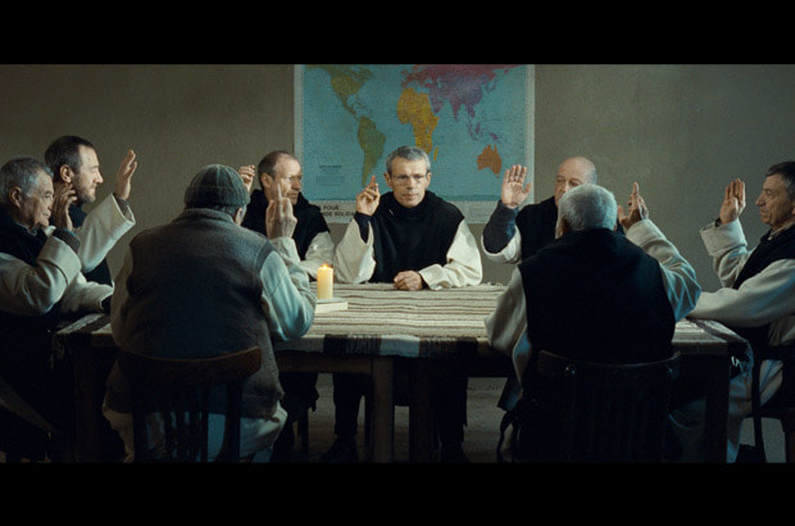
My favorite example of a high functioning committee is from a movie.
“Of Gods and Men is a 2010 French drama film directed by Xavier Beauvois, starring Lambert Wilson and Michael Lonsdale. Its original French language title is Des hommes et des dieux, which means "Of Men and of Gods" and refers to a verse from the Bible shown at the beginning of the film. It centers on the monastery of Tibhirine, where nine Trappist monks lived in harmony with the largely Muslim population of Algeria, until seven of them were kidnapped and assassinated in 1996 during the Algerian Civil War.” (Wikipedia Movie Page)
The monks must discern whether to stay in Tibhirine. Do they continue to care for the people living there and risk being killed, or flee for their own safety? Their process for discernment is compelling. The monks meet once a week at a table. Each monk is given time to articulate their thoughts about staying or leaving. At first, there is disagreement. The meeting ends and the monks return to their daily and weekly routines (which are mostly done in silence). This is their individual time to think, reflect, observe, and discover. The following week they gather again at the table and again articulate their thoughts about staying or leaving. And again, they return to their daily and weekly routines. This process continues for several weeks. There is time to discuss and time to think. Ultimately, after several weeks, the decision is made to stay.
This pattern of engagement and solitude provided a structure to reduce the automatic reactivity from fear and anxiety. Too often, when it comes to making important decisions, some committee members are more vocal while others remain silent. Inviting each person to articulate their thinking about an issue is essential. So is spending time apart to reflect, think, observe, and discover.
The committees in your congregation are probably not working on life and death decisions, although, at times, it may feel like it. Doing important work, what Dr. Murray Bowen called differentiation of self, is one way to overcome fear and do what’s in the best interest of the mission and vision of the congregation.
Subscribe to receive the newest blog in your inbox every Monday morning.
 RSS Feed